





What's Happening?
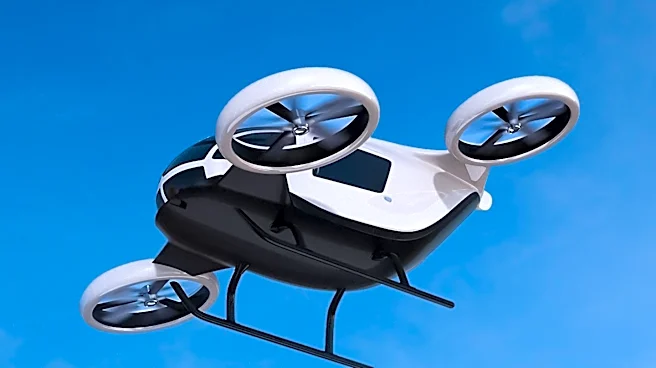
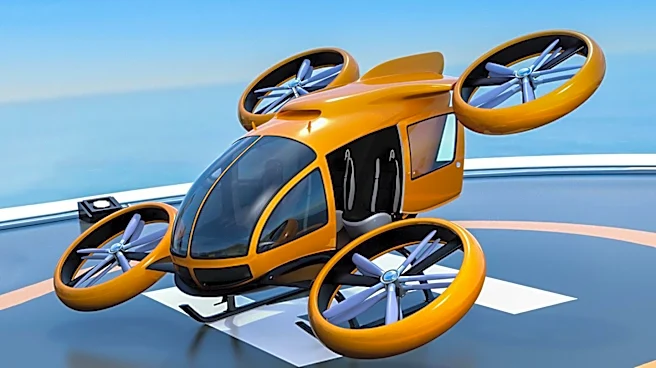
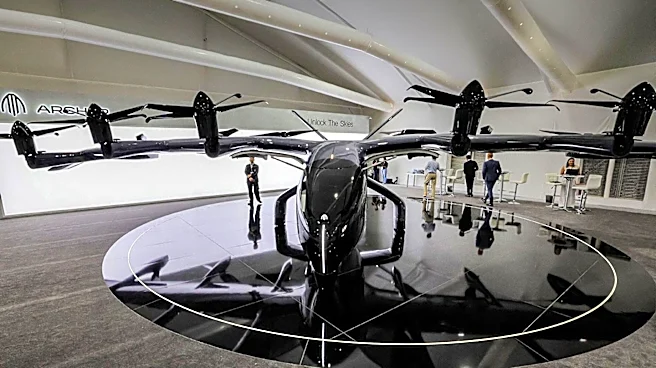
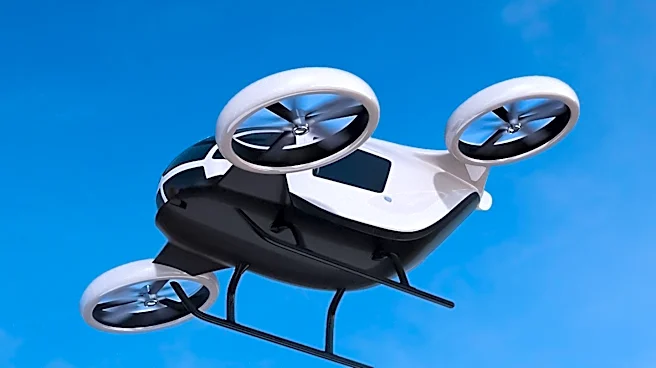
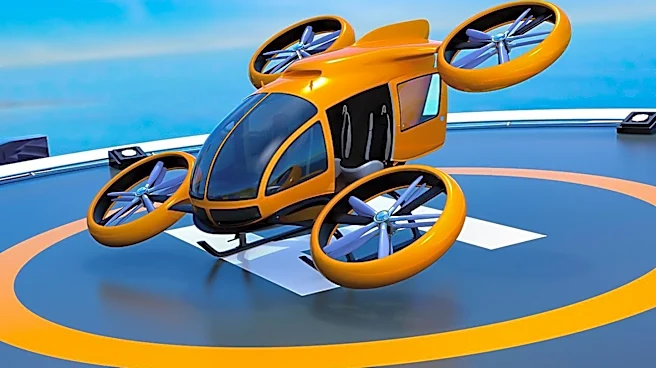
Joby Aviation is advancing towards commercial operations of its electric vertical takeoff and landing (eVTOL) aircraft, with significant support from its partner Toyota. Toyota has invested nearly $650 million in Joby, with an additional $250 million committed,
to aid in scaling eVTOL manufacturing. Joby is currently in the fifth and final stage of the Federal Aviation Administration's (FAA) type certification process, a critical step for obtaining commercial approval. In September, Joby conducted demonstration flights around Dallas-Fort Worth as part of a government-backed initiative to integrate eVTOLs into U.S. airspace. As production gears up, Joby's revenue is projected to increase substantially over the next two years, signaling a move from development to commercialization.
Why It's Important?
The progress made by Joby Aviation, particularly with Toyota's substantial investment and manufacturing expertise, is crucial for the nascent eVTOL industry in the U.S. This collaboration could accelerate the development and deployment of 'flying taxis,' potentially revolutionizing urban and regional transportation. The successful scaling of production and achievement of FAA certification would establish a precedent for other eVTOL companies, fostering competition and innovation in advanced air mobility. For consumers, this could eventually lead to faster, quieter, and more environmentally friendly transportation options. Investors are closely watching Joby as a speculative opportunity in emerging aviation technology, with the potential for significant returns if commercialization is achieved, though the path to market is acknowledged to be challenging.
What's Next?
Joby Aviation's immediate next step involves completing the final stage of the FAA's type certification process. This certification is paramount for the company to begin commercial operations. The FAA is not expected to rush this regulatory process, and any incidents could cause delays or deter potential passengers. Following certification, the focus will shift to ramping up manufacturing with Toyota's assistance to meet anticipated demand. The company's revenue is expected to grow significantly in the next two years as production commences. The broader industry will be observing Joby's journey closely, as its success or challenges will likely influence regulatory approaches and investor confidence in the eVTOL sector.
Beyond the Headlines
The emergence of eVTOL technology, exemplified by Joby Aviation's advancements, carries profound implications beyond just transportation. It represents a significant shift in how society might perceive and utilize airspace, potentially leading to new infrastructure requirements like vertiports and changes in urban planning. Ethical considerations around noise pollution, privacy, and equitable access to this new mode of transport will become increasingly relevant. Legally, the FAA's certification process for autonomous or semi-autonomous aircraft will set critical precedents for future aviation technologies. Culturally, the concept of 'flying cars' moving from science fiction to reality could reshape public imagination and expectations for technological progress, influencing future innovation and investment in advanced mobility solutions.