








What's Happening?
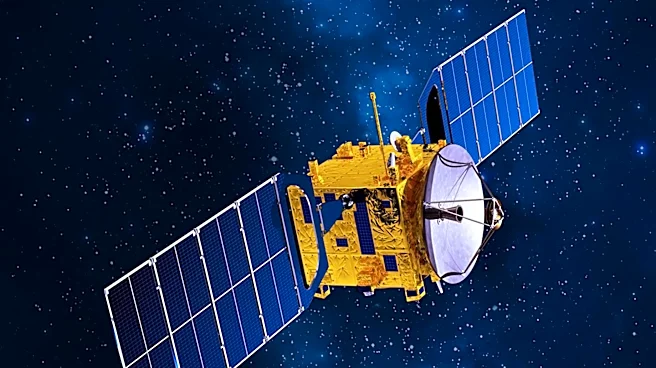
The satellite industry is experiencing rapid growth in partnerships with mobile network operators (MNOs) to enhance global connectivity. Companies like AST SpaceMobile and SpaceX are deploying satellites to support space-based cellular broadband networks.
However, the financial systems underpinning these partnerships are outdated, dating back to 1991, and there is no consensus on how to modernize them. This financial disconnect hampers the industry's ability to scale and fully realize the potential of satellite connectivity. Despite successful pilot projects and significant investments, the lack of updated billing and settlement infrastructure limits the commercial viability of these partnerships.
Why It's Important?
The outdated financial systems present a significant barrier to the satellite industry's growth and its ability to provide seamless global connectivity. As the demand for satellite-based services increases, the inability to efficiently process payments and settlements could stifle innovation and limit market expansion. This issue is critical for MNOs, which currently see limited returns on investment due to the one-way flow of satellite roaming traffic. Without modernized financial frameworks, the industry risks falling behind in the rapidly evolving telecommunications landscape, potentially missing out on lucrative opportunities in the global connectivity market.
What's Next?
To address these challenges, the industry must adopt the GSMA's Billing and Charging Evolution (BCE) framework, which supports flexible charging models necessary for satellite connectivity. Broader adoption of this framework is essential for unlocking the commercial potential of satellite communications. As the industry works towards this goal, collaboration between satellite operators and MNOs will be crucial. The successful integration of these systems could lead to a significant increase in satellite-based services, transforming how global connectivity is achieved and expanding access to underserved regions.