



What's Happening?
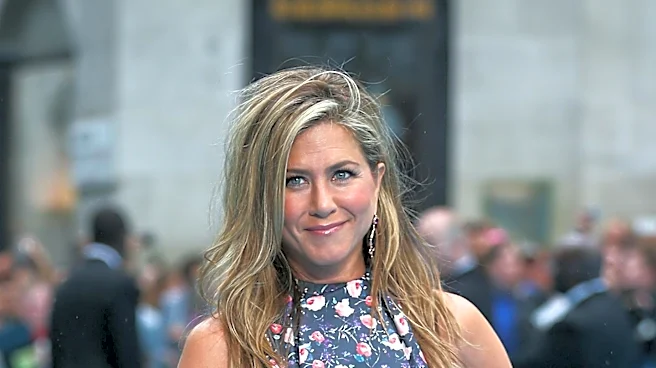
Jennifer Aniston has revealed that her absence from the Met Gala, a prominent annual fashion event, is primarily due to practical reasons and personal comfort. She explained to Glamour that the extensive effort involved in preparing for such a high-profile
event, including the elaborate styling and dressing, does not align with her preference for casual attire. Aniston described herself as a 'jeans and flip-flops and tank top' kind of girl, indicating a strong inclination towards comfort over high fashion. Additionally, she admitted to experiencing anxiety at large events, particularly concerning interactions with media on the red carpet, where she feels her words can be twisted or taken out of context.
Why It's Important?
Aniston's candid explanation offers a relatable perspective on celebrity life, demystifying the allure of high-glamour events like the Met Gala. Her preference for comfort and her acknowledgment of anxiety resonate with a broader audience, challenging the often-unrealistic expectations placed on public figures to constantly engage in elaborate public displays. This stance can empower individuals, both celebrities and the general public, to prioritize personal well-being and authenticity over societal pressures to conform to certain appearances or social obligations. It also contributes to the growing conversation around mental health among celebrities, normalizing feelings of anxiety in high-pressure environments and encouraging a more understanding public discourse.
What's Next?
Aniston's continued adherence to her personal comfort and avoidance of events like the Met Gala will likely reinforce her image as a grounded and authentic celebrity. This may further endear her to fans who appreciate her honesty and relatability. Her comments could also inspire other public figures to be more open about their own preferences and anxieties regarding high-profile events, potentially leading to a broader cultural shift towards valuing personal comfort and mental well-being over strict adherence to celebrity norms. The fashion industry might also take note, perhaps exploring more comfortable yet stylish options for red-carpet events, though the Met Gala's extravagant nature is unlikely to change significantly.
Beyond the Headlines
This story subtly highlights the tension between the curated image of celebrity and the reality of personal preferences and mental health. It prompts a reflection on the performative aspects of fame and the psychological toll that constant public scrutiny can take. Aniston's choice to forgo a major fashion event, despite its prestige, underscores a prioritization of self-care and authenticity, which can be a powerful message in a culture often driven by external validation. It also raises questions about the sustainability of the relentless demand for celebrity appearances at such events and whether a more balanced approach to public engagement is emerging among high-profile individuals.