



What's Happening?
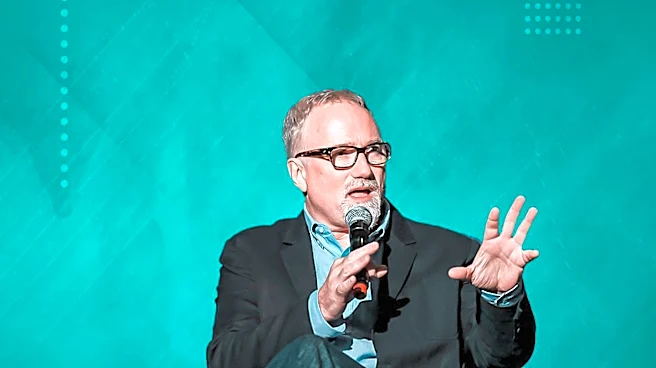
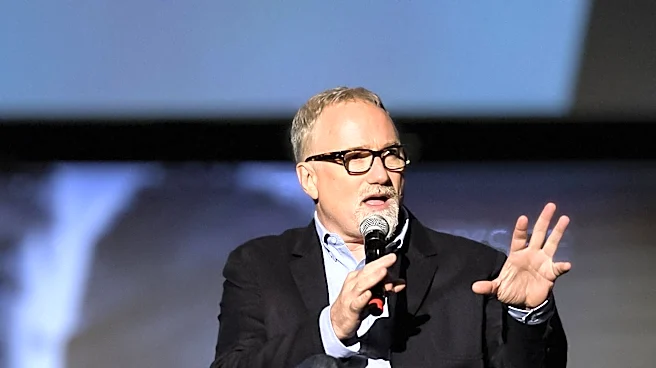
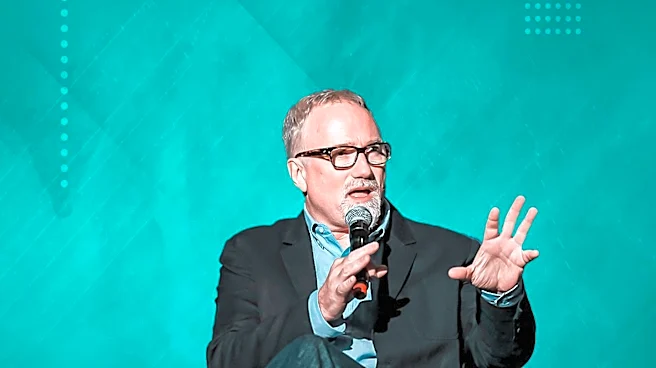
Filmmaker David Fincher recently discussed his initial concept for 'Alien 3' during an appearance on the Happy Sad Confused podcast. Fincher, known for acclaimed films like 'The Social Network' and 'Fight Club,' made his feature-film debut with 'Alien 3,'
an experience he has largely distanced himself from due to significant studio interference. His original pitch aimed to set the film in a prison colony where the audience would feel no sympathy for the characters battling the xenomorph. This contrasted with the previous 'Alien' films, which focused on protagonist Ellen Ripley's maternal instincts and survival. Fincher envisioned a scenario where the incarcerated characters, facing certain death, would collectively decide to take the xenomorph with them. While the theatrical release did feature a prison colony setting, Fincher noted that the characters were ultimately portrayed more sympathetically than he intended. An alternate 'Assembly Cut' of 'Alien 3' was released in 2003, which reportedly aligns more closely with Fincher's original plans.
Why It's Important?
This recollection from David Fincher highlights the persistent challenges filmmakers, even those who later achieve significant acclaim, face with creative control in major studio productions. The divergence between a director's vision and the final theatrical release, as seen with 'Alien 3,' can significantly impact a film's critical reception and legacy. For the film industry, it underscores the tension between artistic integrity and commercial pressures, often leading to compromises that can disappoint both creators and audiences. Fincher's subsequent success with films like 'Se7en' and 'Fight Club' demonstrates that overcoming such early career hurdles can lead to a director establishing a strong, distinctive voice. This situation also provides insight into the development of a major science fiction franchise, revealing how creative decisions and studio mandates shape beloved cinematic universes. The existence of an 'Assembly Cut' further emphasizes the importance of director's cuts in preserving and presenting a filmmaker's intended work.
What's Next?
While 'Alien 3' is a historical film, Fincher's continued discussion of his original vision could reignite interest in the 'Assembly Cut' among fans and film scholars, potentially leading to renewed analysis of its differences from the theatrical release. For Fincher himself, this reflection is part of his ongoing narrative as a prominent filmmaker, offering context to his career trajectory and creative philosophy. The 'Alien' franchise continues to evolve, with rumors of new installments and survival horror games, suggesting that discussions around past creative decisions, like Fincher's 'Alien 3' experience, will remain relevant as the series progresses. This ongoing dialogue contributes to the broader understanding of film production processes and the challenges inherent in adapting complex narratives for the screen.
Beyond the Headlines
Fincher's experience with 'Alien 3' serves as a case study in the broader discussion of authorship in Hollywood. The concept of studio interference versus director's vision is a recurring theme in film history, raising questions about who ultimately controls the artistic output of a major motion picture. This dynamic often leads to debates about the 'true' version of a film and the impact of commercial interests on creative expression. Furthermore, Fincher's desire to explore a premise where characters are unsympathetic to the audience challenges conventional storytelling tropes that often rely on audience empathy. This artistic choice, if fully realized, could have offered a more nihilistic and perhaps more unsettling entry into the 'Alien' franchise, pushing the boundaries of audience engagement with horror. The eventual release of an 'Assembly Cut' years later also speaks to the enduring power of a director's original intent and the desire of fans to experience a film as its creator envisioned.