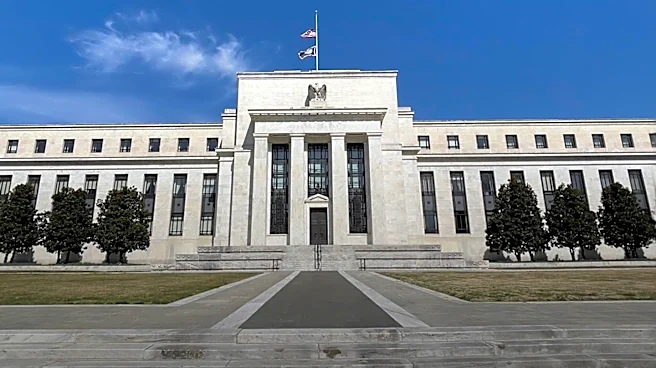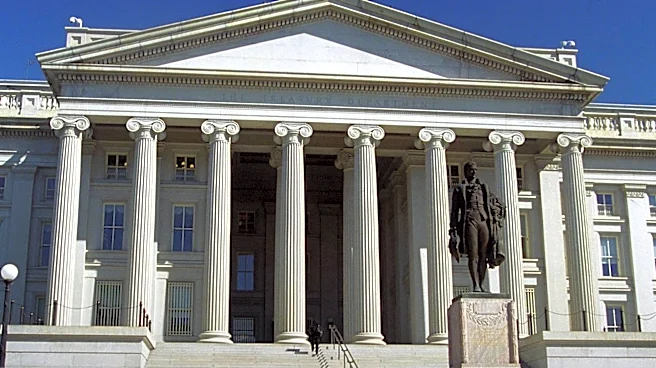







What's Happening?
Treasury yields fell on Monday following a de-escalation of tensions between the U.S. and Iran, which led to a decrease in energy prices. The yield on the 10-year Treasury note, a key benchmark for various loans, dropped by more than 3 basis points to 4.6406%.
Similarly, the 2-year Treasury note yield, which often reflects Federal Reserve interest rate decisions, decreased by 2 basis points. The 30-year Treasury yield, sensitive to geopolitical events, also saw a decline. These movements in yields are inversely related to price changes and reflect the market's response to geopolitical developments.
Why It's Important?
The decline in Treasury yields indicates a shift in investor sentiment following the easing of Middle East tensions. Lower yields can lead to reduced borrowing costs for consumers and businesses, potentially stimulating economic activity. The situation also highlights the interconnectedness of geopolitical events and financial markets, where changes in international relations can have immediate impacts on economic indicators. Investors and policymakers will be closely monitoring these developments as they assess the broader implications for the U.S. economy and financial stability.
What's Next?
As the Federal Reserve prepares for its upcoming interest rate decision, the recent changes in Treasury yields and geopolitical dynamics will be key considerations. Investors will also be watching for upcoming economic data releases, including the core PCE price index and GDP figures, which could influence future monetary policy decisions. The evolving situation in the Middle East and its impact on energy prices will remain a focal point for market participants, as they evaluate potential risks and opportunities in the current economic landscape.