


What's Happening?
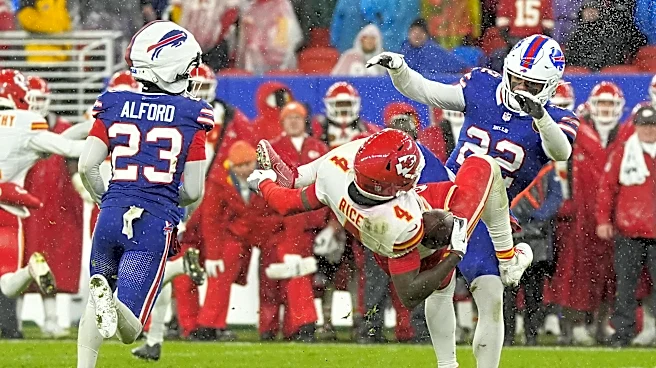
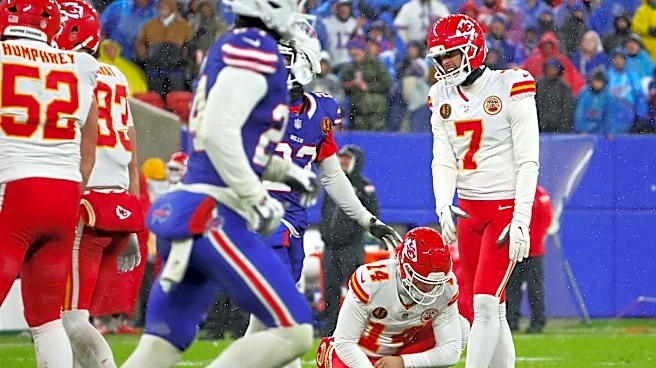
Kansas City Chiefs wide receiver Rashee Rice maintains that his 11-yard reception on third-and-10, which was overturned to an incompletion after a replay review by the NFL's headquarters in New York City, should have stood as a catch. The play occurred
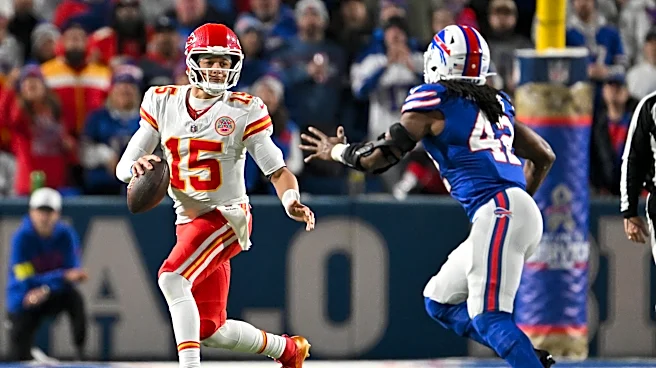
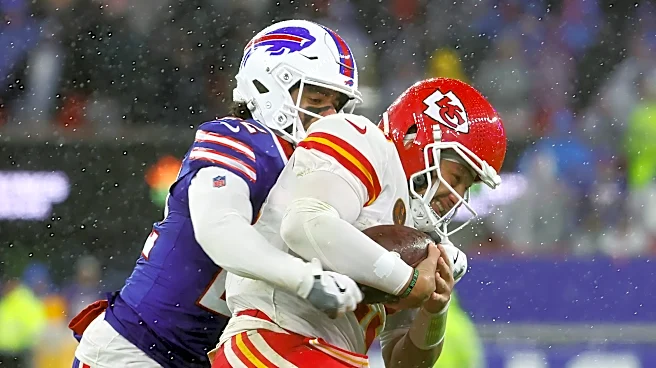
during the Chiefs' 13-10 loss to the Buffalo Bills. Rice was hit by Bills safety Amani Hooker while attempting to secure the ball in the middle of the field. Despite Rice's belief, referee Alex Kemp announced that the pass from quarterback Patrick Mahomes was incomplete because the ball, while in Rice’s right hand, hit the turf. According to Rice, no officials explained the reasoning behind the overturned call to him. Quarterback Patrick Mahomes also expressed his view, stating that from his angle, he believed Rice's hand was under the ball.
Why It's Important?
This incident highlights the ongoing debate and scrutiny surrounding replay review decisions in the NFL, particularly those involving critical plays that can significantly impact game outcomes. Controversial calls can affect team morale, fan perception, and potentially influence the trajectory of a team's season. For the Chiefs, a team with playoff aspirations, such a ruling in a close game against a conference rival can be particularly impactful, potentially altering their seeding or even their playoff berth. The lack of immediate explanation to the player involved, as stated by Rice, also raises questions about communication protocols during replay reviews. These types of decisions can lead to calls for further clarification or adjustments to the NFL's rulebook regarding what constitutes a complete catch, aiming for greater consistency and transparency.
What's Next?
While the specific game outcome cannot be changed, the controversy surrounding Rashee Rice's overturned catch may fuel further discussions among NFL officials, coaches, and players regarding the interpretation and application of the catch rule. Such incidents often lead to internal reviews by the league to assess officiating performance and rule clarity. Fans and sports analysts will likely continue to debate the call, contributing to ongoing conversations about the fairness and accuracy of replay technology in professional football. The Chiefs will need to move past this contentious decision as they continue their season, focusing on upcoming games to secure a strong playoff position, regardless of past officiating calls.
Beyond the Headlines
The recurring nature of controversial catch rulings in the NFL points to a deeper challenge in defining and consistently applying complex rules in a fast-paced, high-stakes environment. This issue extends beyond individual games, impacting the integrity of the sport and fan confidence in officiating. The subjective nature of what constitutes 'control' and 'football move' often leads to differing interpretations, even with the aid of slow-motion replays. This ongoing struggle underscores the difficulty of balancing the desire for perfect calls with the inherent ambiguities of human athletic performance. It also highlights the psychological impact on players, who must quickly adapt to and accept decisions that can feel unjust, potentially affecting their trust in the officiating process.