








What's Happening?
The National Basketball Players Association (NBPA) has voiced strong opposition to the NBA's 'second apron' financial system, which imposes severe luxury tax penalties on teams exceeding a $221.7 million spending threshold. David Kelly, the executive
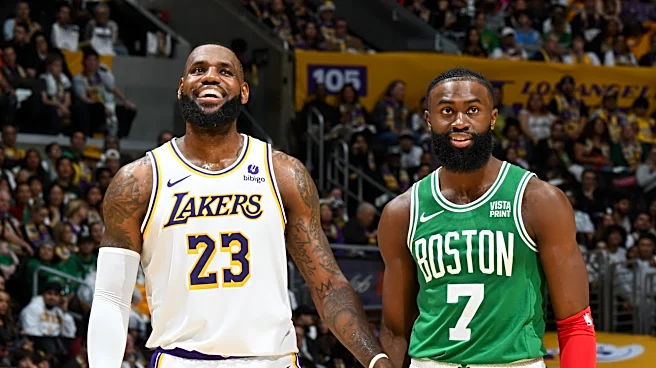
director of the NBPA, argued that the system, introduced in 2023, was not designed to promote parity as claimed by NBA commissioner Adam Silver, but rather to control player salary costs. The system has led to significant financial penalties and restrictions on team roster-building, causing teams to avoid surpassing the second apron. The Cleveland Cavaliers were the only team to exceed this threshold in the 2025-26 season. The Boston Celtics cited the second apron as a reason for trading Jaylen Brown, and the New York Knicks have also expressed concerns about the system's impact on team composition.
Why It's Important?
The second apron system has significant implications for the NBA's financial landscape and competitive balance. By imposing harsh penalties on high-spending teams, it aims to distribute talent more evenly across the league. However, the NBPA argues that it places undue financial pressure on players, forcing them to accept lower salaries to keep teams intact. This could lead to a shift in how teams manage their rosters and finances, potentially affecting player movement and team strategies. The system's impact on player salaries and team dynamics could influence future collective bargaining negotiations and the overall economic structure of the NBA.
What's Next?
The NBPA is advocating for changes to the second apron system, seeking to address its impact on players and teams. Discussions between the NBA and the NBPA could lead to modifications in the current collective bargaining agreement. If no changes are made, the issue may be revisited in the next round of labor negotiations, which could begin after the 2028-29 season if either party opts out of the current agreement. The ongoing debate highlights the need for a balance between financial control and maintaining competitive fairness in the league.