





What's Happening?
The Business of Fashion has highlighted a growing debate within the luxury industry concerning the role and value of high-performing salespeople, often referred to as 'million-dollar salespeople.' This discussion comes as top-tier clients now account
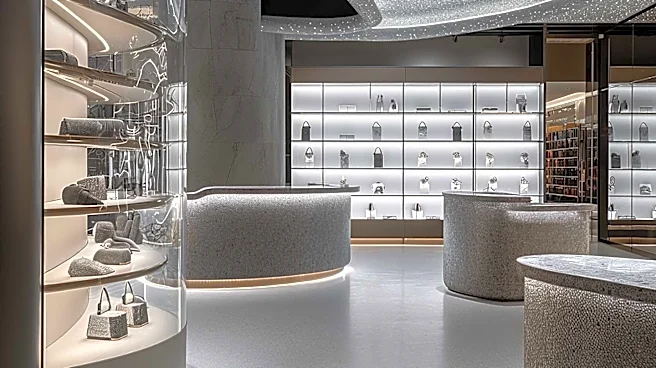
for a larger share of luxury spending, increasing from 14% to 24% over the past decade. Luxury brands are shifting their focus from acquiring new clients to retaining existing ones, emphasizing connection, intimacy, excellence, and recognition. The report notes that while consultants suggest training salespeople in desire, and AI briefs clients, the physical retail environment also plays a crucial role. The article contrasts the traditional 'salon' model, where personal relationships and recognition were paramount, with modern flagship stores that often feature cafes, attracting crowds and potentially hindering personalized service. Brands like JIL SANDER are noted for maintaining a 'salon' approach by providing top clients with direct contact details, while others struggle with overcrowded spaces that make client recognition difficult. The industry is grappling with how to balance creating experiences for many while catering to the exclusive needs of a few high-value clients.
Why It's Important?
This shift in the luxury retail landscape has significant implications for how brands operate and interact with their most valuable customers. The increasing reliance on top-tier clients means that effective client retention strategies are more critical than ever. Brands that fail to provide personalized, exclusive experiences risk alienating their most profitable segment. The debate over the luxury salesperson's role underscores a broader challenge: how to integrate modern retail strategies, such as experiential marketing and AI-driven insights, without losing the human touch that defines luxury service. The physical store environment, once a sanctuary for exclusive interactions, is now often a dual-purpose space that must cater to both casual visitors and high-spending clientele. This creates operational complexities and demands a re-evaluation of store layouts and service models. The success of luxury brands will increasingly depend on their ability to cultivate genuine relationships and provide a sense of exclusivity, which directly impacts brand loyalty and long-term revenue growth.
What's Next?
Luxury brands are likely to continue experimenting with retail formats and service models to better cater to their top-tier clients. This could involve creating more private shopping experiences, investing in advanced client relationship management (CRM) systems that empower sales associates, and re-evaluating the design and purpose of physical store spaces. The emphasis on training salespeople to understand and anticipate client desires will intensify, potentially leading to more specialized roles and higher compensation for those who excel in client retention. Brands may also explore innovative ways to leverage technology, such as AI, to enhance personalized service without replacing human interaction. The upcoming haute couture show by Hermès, its first in 190 years, suggests a potential return to more exclusive, salon-like presentations, indicating a broader industry trend towards re-emphasizing intimacy and bespoke experiences for high-value customers. This evolution will likely see a continued focus on distinguishing between 'experience seekers' and 'millionaire buyers' within retail environments.
Beyond the Headlines
The evolving role of the luxury salesperson and the retail environment reflects deeper societal and economic shifts. The increasing concentration of wealth means that a smaller segment of the population drives a disproportionately large share of luxury consumption. This trend challenges traditional retail models that aimed for broader appeal. Ethically, brands must navigate the tension between exclusivity and accessibility, ensuring that their pursuit of high-value clients does not alienate a wider customer base or create perceptions of elitism that could harm brand image. Legally, data privacy and personalized client information management will become even more critical as brands seek deeper insights into their top clients. Culturally, the shift signifies a return to the artisanal, relationship-driven aspects of luxury, moving away from purely transactional interactions. This could lead to a redefinition of what constitutes 'luxury' in the modern era, emphasizing bespoke service and authentic connection over mere product acquisition.