




What's Happening?
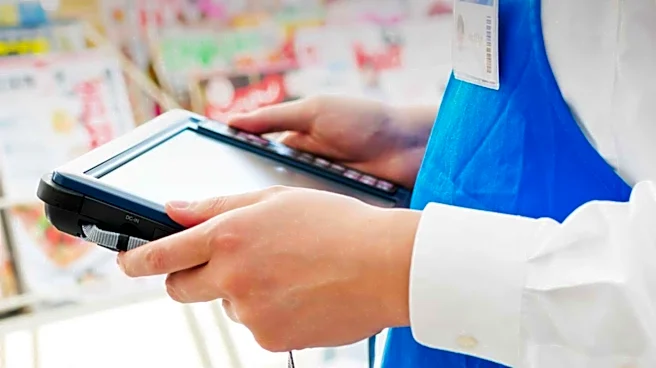
UROVO, a global provider of enterprise mobility and AIDC solutions, has launched two new retail solutions: the SP35 Personal Shopper and the U100 Price Checker. These devices are designed to extend self-service capabilities across the shop floor, offering
both mobile and fixed touchpoints for shoppers. The SP35 Personal Shopper allows customers to navigate stores, scan items, and make payments on the go, featuring optional UWB-powered positioning for product location, barcode scanning with an auto-scan mode, and mobile payment options including NFC and SoftPOS. The U100 Price Checker, a fixed shelf-side solution, provides product information, pricing displays on a 10.1-inch HD touchscreen, and optional UHF RFID for multi-item product lookup and comparison. It also includes presence sensing to activate the display as shoppers approach. These innovations aim to streamline the shopping experience by enabling customers to complete tasks without constant staff assistance, thereby allowing store teams to focus on higher-value customer service.
Why It's Important?
The introduction of UROVO's SP35 and U100 is significant for the U.S. retail industry as it addresses the growing demand for convenient in-store experiences while alleviating pressure on store staff. By enabling more independent shopping through mobile and fixed self-service options, retailers can enhance operational efficiency and customer satisfaction. This technology allows businesses to meet shoppers' needs for information, assistance, and transaction capabilities directly at various points in the store, rather than relying solely on traditional checkout counters or kiosks. Retailers stand to gain from reduced labor costs associated with routine tasks, improved customer flow, and the ability to reallocate staff to more complex or personalized customer interactions. Consumers benefit from a more seamless and efficient shopping journey, with immediate access to product details and pricing, and the flexibility to pay on the go. This shift towards distributed self-service could redefine the in-store retail experience, making it more agile and customer-centric.
What's Next?
UROVO plans to showcase the SP35, U100, and its connected retail portfolio at NRF 2026: Retail's Big Show Europe, scheduled for September 15–17, at Paris Expo Porte de Versailles. This event will serve as a platform for UROVO to demonstrate the capabilities of these new solutions to a broader international retail audience, including potential U.S. partners and clients. Following the exhibition, U.S. retailers are likely to evaluate and potentially adopt these technologies to enhance their in-store operations. The widespread implementation of such self-service tools could lead to further innovation in retail technology, with other companies developing similar or more advanced solutions. Retailers will need to consider integration challenges with existing systems and staff training to maximize the benefits of these new devices. The success of these products could also influence consumer expectations, pushing for more ubiquitous self-service options across various retail sectors.
Beyond the Headlines
The broader implications of UROVO's new self-service solutions extend beyond immediate retail efficiency. Ethically, these technologies raise questions about the future of retail employment, as increased automation in routine tasks could potentially reduce the need for certain staff roles. However, it also creates opportunities for employees to transition into more specialized customer service or technical support positions. Culturally, the shift towards more independent shopping experiences reflects a growing consumer preference for autonomy and speed, driven by digital convenience. Legally, the implementation of mobile payment systems like SoftPOS will require adherence to evolving data security and privacy regulations to protect customer information. Long-term, these innovations could contribute to a more personalized and data-driven retail environment, where customer behavior data collected through these devices informs inventory management, store layout, and marketing strategies, fundamentally reshaping the physical retail landscape.