


What's Happening?
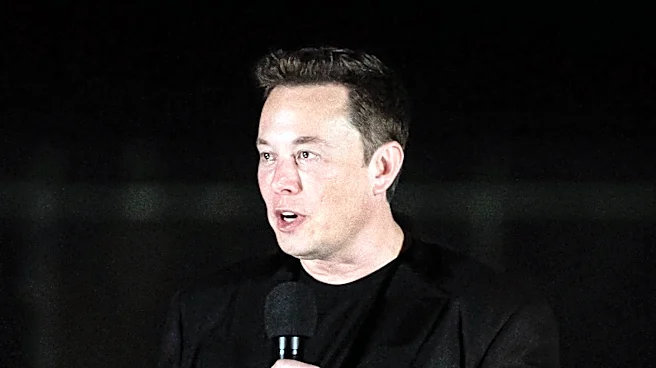
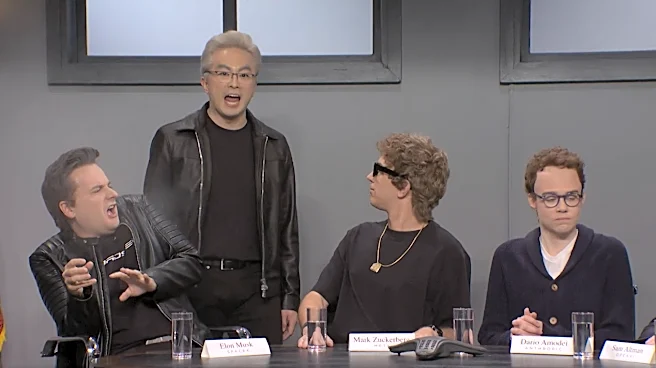
Elon Musk, the CEO of Tesla and owner of X (formerly Twitter), publicly criticized Jeremy Culhane's impression of him on a recent episode of Saturday Night Live (SNL). Following a tweet from a self-proclaimed 'Tesla news break' account that rated the performances
of various tech overlord impressions from the show's cold open, Musk responded by giving Culhane's portrayal a five out of ten. He further commented, 'They need to try harder.' In a subsequent post, Musk shared a graphic of a Venn Diagram, which depicted one circle labeled 'Humor' and another labeled 'SNL,' with an overlapping section marked 'The good sketches.' This interaction occurred after an SNL sketch featuring John Mulaney as a CIA officer instructing tech billionaires, including a character portraying Musk, on avoiding international scandals.
Why It's Important?
This event highlights the ongoing intersection of celebrity culture, media criticism, and the public personas of prominent business figures. Elon Musk's direct engagement with a comedic portrayal of himself on a widely watched television show underscores the increasing trend of public figures using social media platforms to respond to media representations. His critique, while seemingly lighthearted, can influence public perception of both SNL's comedic quality and his own image. For SNL, such direct feedback from a subject of their satire can generate buzz, but also potentially invite further scrutiny of their comedic approach. This interaction also reflects the broader cultural phenomenon where figures of power and influence are increasingly subjected to and respond to public parody and commentary.
What's Next?
It is likely that this interaction will be discussed further in entertainment news and on social media, potentially leading to more commentary from both SNL cast members or writers, and other public figures. Musk's continued use of X to express his opinions on various topics, including pop culture, suggests that similar public critiques could occur in the future. This incident may also prompt SNL to consider how they portray prominent figures, or it could reinforce their commitment to their satirical style. The broader implication is a continued blurring of lines between traditional media and direct public engagement from figures like Musk, shaping how public figures and media outlets interact.
Beyond the Headlines
Beyond the immediate critique, this incident touches on the evolving nature of satire and public figures' reactions in the digital age. Historically, public figures often maintained a more detached stance from comedic portrayals. However, with the advent of social media, direct engagement has become more common, allowing figures like Musk to instantly offer their perspective. This can lead to a more dynamic, albeit sometimes contentious, relationship between satirists and their subjects. It also raises questions about the power dynamics at play when a billionaire critiques a comedic performance, and how such interactions might influence creative freedom or public perception of humor. The use of a Venn Diagram by Musk also reflects a contemporary, meme-driven communication style that is increasingly prevalent.