


What's Happening?
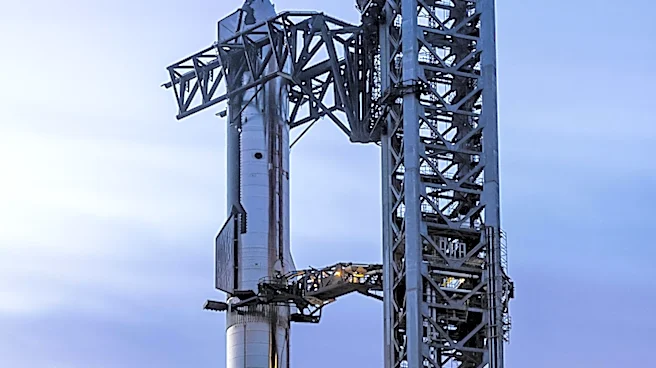
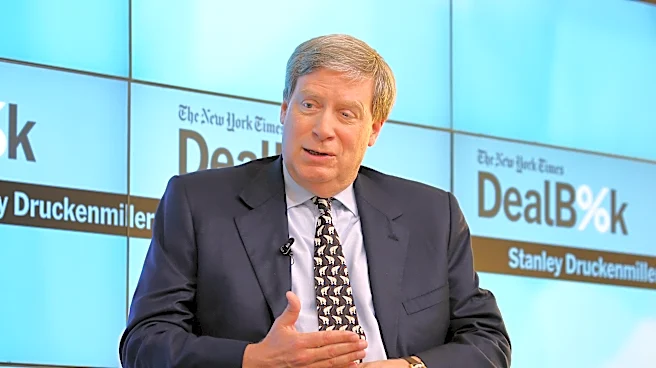
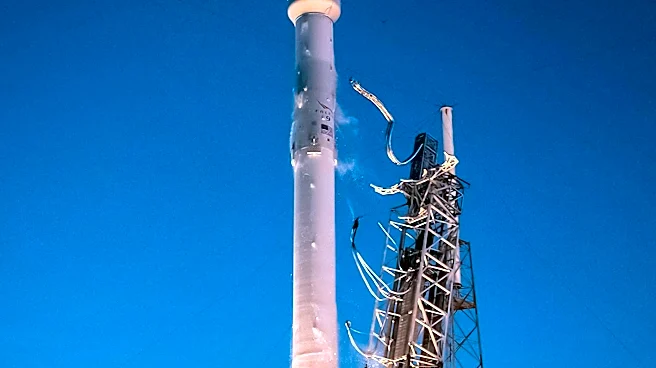
Billionaire hedge fund manager David Tepper, head of Appaloosa Management, substantially increased his firm's investment in Space Exploration Technologies (SpaceX) during the third quarter. SpaceX, which went public just before Q2 ended, became the fourth-largest
position in Tepper's portfolio by the end of Q3, representing nearly 8% of its total value. This move indicates a strong vote of confidence from Tepper in the company. The article notes that while retail investors often look to billionaire investors for ideas, the information from 13F filings, which report end-of-quarter holdings, can be significantly delayed, sometimes by over four months. This delay means that by the time the public learns of such investments, the market conditions and stock prices may have changed considerably. For instance, SpaceX's stock traded between $110 and $160 per share in Q3, ending the quarter around $151, and is currently priced at approximately $130 per share.
Why It's Important?
This significant investment by a prominent hedge fund manager like David Tepper in SpaceX highlights the growing interest and perceived value in the private space exploration company. While the information is delayed, such disclosures can influence market sentiment and potentially attract more investors to SpaceX, even if the stock price has shifted since Tepper's initial purchases. The article also points out a crucial aspect of investment strategy: the lag in 13F filings means retail investors are often acting on outdated information. This emphasizes the risk of blindly following institutional investors, as their entry points and market conditions differ. Furthermore, the revelation that SpaceX's artificial intelligence segment now accounts for over half its revenue and grew by 213% year-over-year last quarter redefines the company's investment profile, positioning it not just as a space exploration entity but also as a significant player in the AI sector. This shift could attract a broader range of investors interested in AI growth opportunities.
What's Next?
The increased focus on SpaceX's artificial intelligence segment, which CEO Elon Musk expects to continue growing, suggests that the company may increasingly be viewed as an AI investment rather than solely a space exploration company. This reclassification could lead to a re-evaluation of its market position and potential for future growth. Investors will likely monitor SpaceX's performance, particularly its AI division, for further indications of its trajectory. The delayed nature of 13F filings means that future reports will continue to provide insights into institutional investor sentiment, albeit with a time lag. Retail investors, now aware of Tepper's Q3 moves and the current stock price, have the opportunity to make more informed decisions, potentially benefiting from the stock being 'on sale' relative to its Q3 trading range. The ongoing growth of SpaceX's AI segment could also attract more tech-focused investment funds.
Beyond the Headlines
The evolving narrative of SpaceX as an AI company, rather than just a space exploration firm, reflects a broader trend of technological convergence where companies diversify their revenue streams and leverage advanced technologies across different sectors. This shift could have profound implications for how industries are categorized and valued in the future. The significant growth of SpaceX's AI segment underscores the increasing integration of artificial intelligence into various business models, even in seemingly unrelated fields like space technology. This development also highlights the strategic importance of AI as a growth driver for companies seeking to expand their market reach and competitive advantage. The case of Tepper's investment also brings to light the inherent challenges and information asymmetry faced by retail investors when trying to emulate the strategies of large institutional funds, emphasizing the need for independent research and a critical understanding of market dynamics.