





What's Happening?
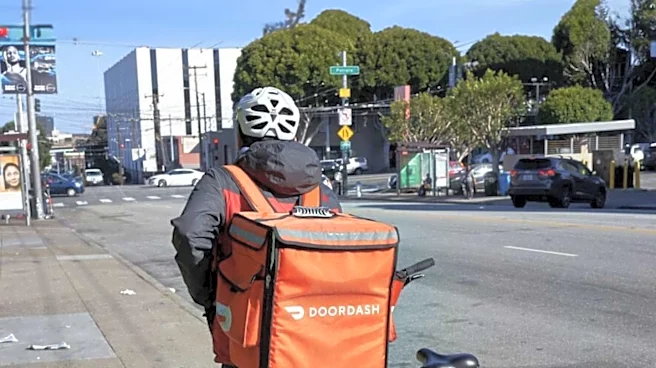
DoorDash, a leading commerce platform connecting merchants, consumers, and Dashers, is actively recruiting an Associate for its DashMart Supply Chain Profitability Strategy & Operations team. This role is crucial for enhancing the profitability of DashMart,
DoorDash's first-party offering for on-demand deliveries of household essentials, groceries, and other goods. The selected Associate will focus on reducing supply chain costs through data analysis, utilizing tools like SQL and AI to identify cost-benefit opportunities and design solutions. Projects will encompass cost optimization across inventory and freight, involving collaboration with operations, supply chain, vendor management, and category teams, as well as product and engineering teams for scalable fixes. The position is directly tied to a key profitability metric, highlighting its significant impact on the company's financial performance. DoorDash, founded in 2013 and headquartered in San Francisco, California, is expanding its services beyond food delivery to become a platform for a wider range of goods.
Why It's Important?
This strategic hiring by DoorDash underscores its commitment to expanding its market presence and optimizing its operational efficiency in the competitive on-demand delivery sector. By focusing on supply chain profitability for DashMart, DoorDash aims to strengthen its financial foundation and enhance its ability to offer a diverse range of goods beyond traditional food delivery. This move is significant for the U.S. e-commerce and logistics industries, as it signals a continued push towards vertical integration and cost-effective delivery solutions. Increased profitability in DashMart could allow DoorDash to invest further in technology, expand into new markets, and offer more competitive pricing to consumers, potentially impacting smaller delivery services and traditional retail. The emphasis on AI and data analysis for cost reduction also highlights a broader industry trend towards leveraging advanced analytics to drive business decisions and operational improvements, setting a precedent for how other companies might approach supply chain management.
What's Next?
The new Associate will be tasked with setting financial goals for profitability metrics, creating playbooks to achieve these goals, and assessing the financial and operational impacts of their decisions. They will be responsible for implementing strategies from documentation to measuring success, and transforming analytical insights into operational experiments for scalable improvements. This role will involve significant cross-functional collaboration with vendor management, supply chain, category management, product, engineering, and finance teams. The company expects this position to be filled by October 12, 2026. Success in this role could lead to enhanced efficiency and profitability for DoorDash's DashMart operations, potentially influencing its overall market strategy and expansion into new product categories. The outcomes of these profitability initiatives could also inform future investment decisions and strategic partnerships for DoorDash.
Beyond the Headlines
The focus on supply chain profitability within DoorDash's DashMart operations reflects a deeper industry trend towards maximizing efficiency and reducing costs in the last-mile delivery sector. As e-commerce continues to grow, the logistical challenges and associated costs of delivering a wide array of goods become increasingly complex. DoorDash's investment in an Associate specifically for this purpose, leveraging SQL and AI, indicates a strategic shift towards data-driven decision-making and technological solutions to address these challenges. This approach could set new benchmarks for operational excellence in the on-demand delivery market, potentially influencing how competitors structure their supply chains and utilize advanced analytics. Furthermore, the expansion from food delivery to 'any and all goods' signifies a broader ambition to become a comprehensive logistics platform, blurring the lines between traditional retail, grocery, and specialized delivery services, and potentially reshaping consumer expectations for convenience and speed in product acquisition.