





What's Happening?
NearHub is positioning its Windows-based interactive display, the NearHub Board Max, as a solution for Mac-based offices seeking enhanced collaboration and meeting capabilities. While the Board Max runs on Windows 11 Pro, it is designed to work alongside
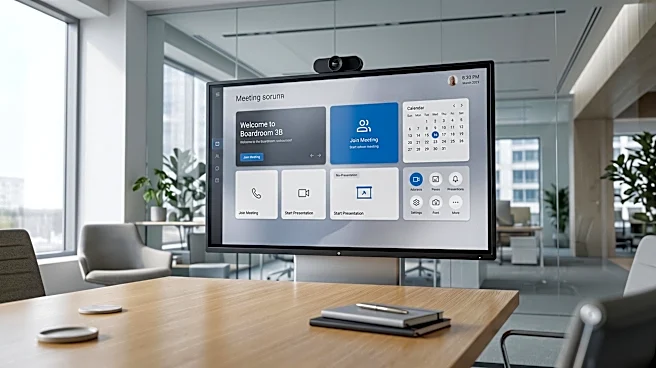
Macs, allowing employees to share content from their MacBooks via AirPlay, browser-based Webcast, NearHub Tail, and HDMI. The company emphasizes that while content sharing is supported, direct touch control of Mac applications from the board and access to the board's built-in audio-visual (AV) devices by a connected Mac are separate functionalities that require specific verification. The Board Max itself offers a 4K touchscreen with 40-point touch, supporting up to eight simultaneous writers, and can host meetings independently using desktop versions of Zoom and Microsoft Teams, equipped with a 4K camera and an eight-element microphone array.
Why It's Important?
The introduction of the NearHub Board Max addresses a common challenge in mixed-OS office environments: integrating collaborative display technology without forcing a complete platform switch. For Mac-centric businesses, this means they can leverage advanced interactive whiteboarding and conferencing features while employees continue to use their preferred macOS devices. This flexibility is crucial for maintaining productivity and workflow continuity. The ability to host meetings directly on the board, independent of a connected MacBook, streamlines the meeting process and reduces potential technical complexities. By providing a dedicated collaborative environment, the Board Max aims to enhance teamwork, brainstorming, and remote meeting experiences, which are increasingly vital in modern workplaces.
What's Next?
Offices considering the NearHub Board Max are advised to thoroughly test all required functionalities, including content sharing, touch control of Mac applications (if needed), and AV device access, with their specific Mac models and macOS versions before purchase. NearHub will likely continue to refine its compatibility features and integration options to better serve mixed-OS environments. The emphasis on independent meeting hosting on the board suggests a trend towards self-contained collaborative devices that minimize reliance on individual user laptops during meetings. As hybrid work models evolve, the demand for seamless integration between various operating systems and collaborative tools will continue to drive product development in this sector.
Beyond the Headlines
The challenge of integrating diverse operating systems in a collaborative workspace highlights a broader trend in enterprise technology: the need for flexible, platform-agnostic solutions. While the NearHub Board Max offers a practical bridge, it also underscores the complexities of achieving true interoperability. This situation can lead to a re-evaluation of IT infrastructure strategies, pushing companies to invest in solutions that prioritize seamless user experience regardless of the device. Furthermore, the focus on independent meeting hosting on the board reflects a shift towards dedicated meeting room technology, potentially reducing the burden on individual employees' devices and enhancing meeting efficiency. This also raises questions about data security and privacy when content is shared across different platforms and devices within a collaborative network.