


What's Happening?
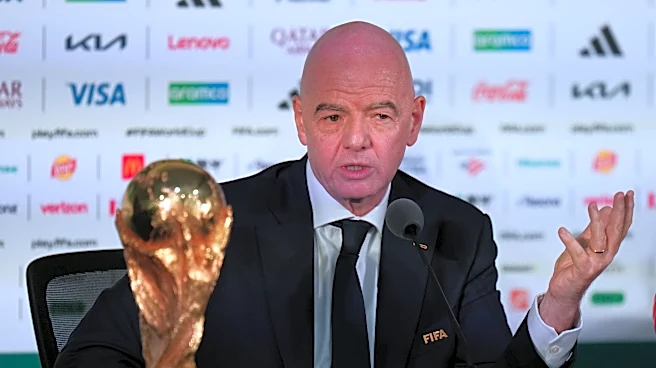
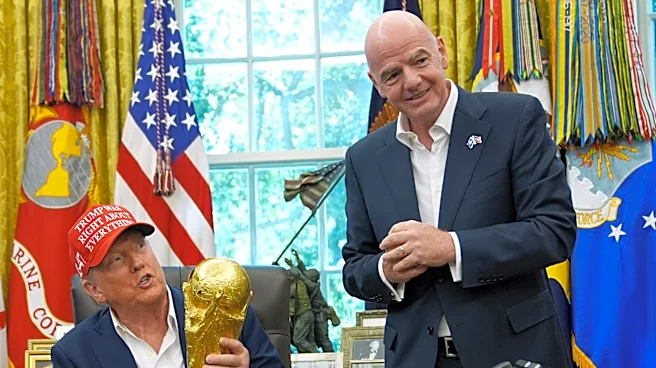
FIFA's plan to sell a stake in its commercial rights, valued at $20 billion, to a private equity firm led by Joshua Kushner has been met with significant internal opposition. Kevin Lamour, a senior FIFA executive, publicly criticized the lack of transparency
in the plan, suggesting that staff were misled by FIFA President Gianni Infantino. The proposal involved spinning off FIFA's commercial businesses, including the World Cup, into a subsidiary with 20% ownership by private investors. The plan has faced backlash, including the resignation of Carlos Cordeiro, a senior adviser to Infantino, who opposed the deal. Cordeiro, a former U.S. Soccer Federation president, argued that the deal would mortgage football's future without compelling justification, given FIFA's substantial financial reserves.
Why It's Important?
The collapse of this plan could have significant implications for FIFA's financial strategy and governance. The proposal's failure highlights internal dissent and concerns over transparency and decision-making processes within FIFA. The controversy may affect FIFA's reputation and its leadership, particularly President Infantino, who has been in office for over a decade. The plan's rejection also underscores the importance of maintaining control over football's most valuable assets, as selling a stake could have long-term consequences for the sport's financial health and governance. Stakeholders, including national federations and fans, may view this as a victory for maintaining the integrity and independence of football's governing body.
What's Next?
With the plan facing significant opposition, FIFA may need to reassess its commercial strategy and explore alternative ways to generate revenue without compromising its assets. The organization might also face increased scrutiny from member federations and stakeholders, prompting potential reforms in governance and decision-making processes. Infantino's leadership could be challenged, especially with upcoming elections, as stakeholders demand greater transparency and accountability. FIFA's ability to navigate these challenges will be crucial in maintaining its position as the global governing body of football.