

What's Happening?
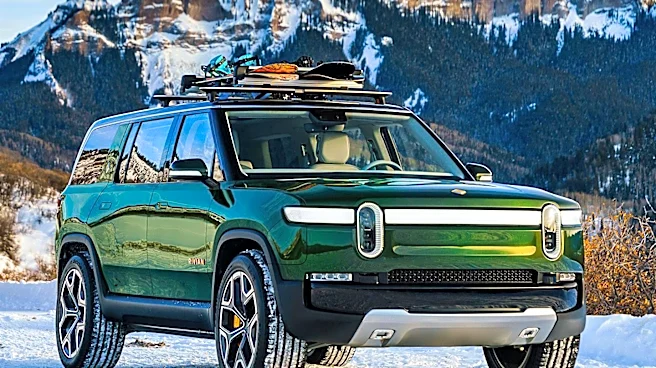
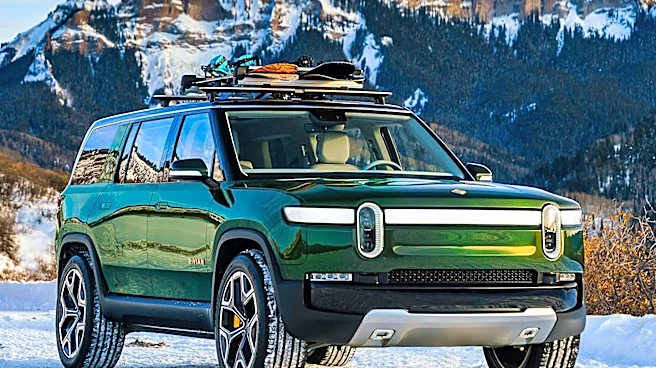
Rivian, an electric vehicle manufacturer, has issued a recall for approximately 98,800 to 100,700 of its R1S, R1T, and early R2 vehicles. The recall addresses a software bug that could cause notifications to overlay on the rearview camera display when
the vehicle is in reverse. No crashes have been reported due to this issue, and the fix is being implemented through an over-the-air software update, which has already been rolled out to most of the affected fleet. In separate news, Rivian CEO RJ Scaringe indicated that the upcoming R3 vehicle will be priced 'materially lower' than the R2, with an even more affordable R4 model planned. The R2's launch trim is priced around $60,000, with a $45,000 base model expected in late 2027. Deliveries of the R2 began in June, while the R3 is not anticipated before 2028.
Why It's Important?
This recall highlights the ongoing challenges and rapid evolution within the electric vehicle industry, particularly concerning software integration and safety. While the over-the-air update demonstrates the agility of modern EV technology to address issues remotely, it also underscores the complexity of these systems. For Rivian, a relatively new player in the competitive automotive market, managing recalls efficiently is crucial for maintaining consumer trust and brand reputation. The announcement of cheaper future models, the R3 and R4, is significant for Rivian's long-term strategy. By introducing more affordable options, Rivian aims to expand its market reach beyond the premium segment, potentially attracting a broader customer base and increasing sales volume. This move could intensify competition in the mid-range EV market, impacting established automakers and other EV startups.
What's Next?
Rivian will continue to monitor the implementation of the over-the-air software update to ensure all affected vehicles receive the fix for the rearview camera bug. The company's focus will likely shift towards the development and eventual launch of its more affordable R3 and R4 models. These new vehicles are expected to play a critical role in Rivian's strategy to achieve greater market penetration and profitability. The success of these cheaper models will depend on their ability to deliver competitive features and performance at a lower price point, while maintaining Rivian's brand appeal. The automotive industry will be watching closely to see how Rivian's expanded product line impacts its market share and financial performance in the coming years, especially as the broader market for electric vehicles continues to grow and diversify.
Beyond the Headlines
The recall and the strategic shift towards more affordable models reflect broader trends in the automotive industry. The increasing reliance on software in modern vehicles means that over-the-air updates are becoming a standard method for addressing issues, but also introduce new complexities in terms of cybersecurity and regulatory oversight. For consumers, this means potentially quicker fixes but also a greater dependence on manufacturers for software integrity. Rivian's move to offer cheaper EVs is indicative of the industry's push towards mass-market adoption of electric vehicles. As battery technology improves and production costs decrease, more manufacturers are aiming to make EVs accessible to a wider demographic. This trend has significant implications for environmental sustainability, as it could accelerate the transition away from internal combustion engines, and for the economic landscape of the auto industry, fostering innovation and competition in new segments.