


What's Happening?
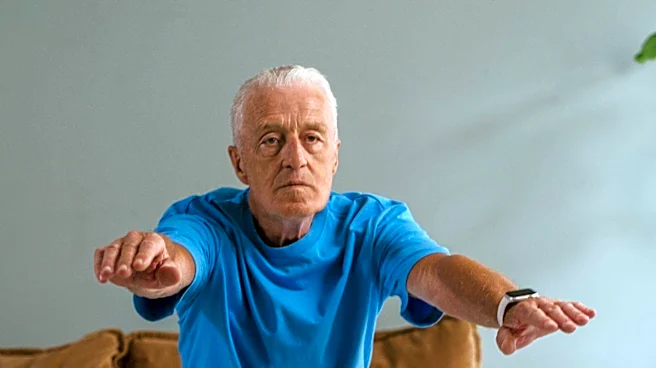
Jarrod Nobbe, a USAW National Coach, Sports Performance Coach, and Personal Trainer, has outlined five daily exercises designed to make getting off the floor easier for individuals over 65. These moves aim to build the necessary strength, mobility, and coordination
to improve confidence and ease in transitioning from the floor to a standing position. The recommended exercises include the Glute Bridge, Quadruped Rock-Back, Tall Kneeling to Half-Kneeling, Half-Kneeling Rise With Support, and Seated Floor Get-Up to Chair Support. Nobbe emphasizes that consistent practice of these movements can lead to immediate progress, making activities like stretching, gardening, or playing with grandchildren more comfortable and accessible. He also advises using support like a chair or wall and practicing both sides to ensure balanced development.
Why It's Important?
This guidance from Jarrod Nobbe is crucial for addressing a significant aspect of functional independence and quality of life for the aging population in the U.S. As individuals age, maintaining the ability to get off the floor independently becomes a key indicator of overall mobility and can prevent falls, a leading cause of injury among seniors. By providing a structured, accessible routine, Nobbe empowers older adults to proactively work on their physical capabilities at home. This initiative supports public health goals by promoting active aging and reducing the burden of age-related mobility issues. The focus on building confidence alongside physical strength is particularly important, as fear of falling often restricts activity, leading to a cycle of deconditioning. Personal trainers like Nobbe play a vital role in translating complex physiological principles into practical, beneficial exercises for diverse populations.
What's Next?
Individuals over 65 can integrate these five daily moves into their routine to gradually improve their floor mobility. Nobbe's recommendations suggest starting with easier components and progressively working on more challenging transitions, always prioritizing safety with nearby support. The emphasis on consistency implies that long-term adherence to such a program will yield the best results. This type of expert-led, accessible fitness advice is likely to continue to gain traction as the U.S. population ages, potentially leading to more widespread adoption of functional fitness programs tailored for seniors. Healthcare providers and community centers might also incorporate these types of exercises into their wellness programs, further supporting older adults in maintaining their independence and quality of life.
Beyond the Headlines
The ability to get off the floor independently is more than just a physical act; it's a symbol of autonomy and resilience for older adults. Nobbe's program addresses not only the physical mechanics but also the psychological barrier of fear and hesitation associated with floor transitions. By breaking down the movement into manageable steps, he helps rebuild confidence, which is often as crucial as physical strength. This approach highlights a holistic view of aging, where physical fitness is intertwined with mental and emotional well-being. The broader implication is a shift towards proactive, preventative health measures that enable seniors to maintain an active and engaged lifestyle, reducing reliance on external assistance and fostering a sense of self-efficacy. This contributes to a more dignified and fulfilling aging experience, challenging societal perceptions of decline in later life.