






What's Happening?
Boeing is confronting significant production challenges with its 737 MAX aircraft, leading to further delays in its ramp-up schedule and potential job cuts. The company initially aimed to increase production from 42 to 47 aircraft monthly by summer 2026,
but this target has now been pushed to early 2027. CEO Kelly Ortberg previously acknowledged that wing production has not met the required output for 47 aircraft per month, and manufacturing process improvements have yielded less efficiency than anticipated. Commercial Airplanes CEO Stephanie Pope announced workforce reductions in an internal memo, citing that slower production schedules have resulted in the division being overstaffed. Boeing plans to reduce approximately 5% of its Commercial Airplanes workforce, which totals around 50,000 employees, through a combination of natural attrition and involuntary layoffs. The company has not ruled out additional job cuts beyond those expected next month, with employment levels across all Commercial Airplanes locations remaining under review.
Why It's Important?
These production delays and job cuts at Boeing carry significant implications for the U.S. aerospace industry and its workforce. The inability to meet production targets impacts Boeing's delivery ambitions, with the company expecting to fall short of its goal of delivering 500 737 aircraft in 2026. This could affect airline customers awaiting new aircraft and potentially lead to financial penalties or strained relationships. For employees, the uncertainty surrounding further layoffs creates anxiety and instability, particularly after the Society of Professional Engineering Employees in Aerospace (SPEEA) was informed that management could not confirm if the upcoming layoffs would be the final reduction. The restructuring, despite a substantial aircraft backlog of approximately $745 billion, highlights persistent manufacturing capacity and production consistency issues, which could affect Boeing's competitive standing and its ability to capitalize on strong market demand.
What's Next?
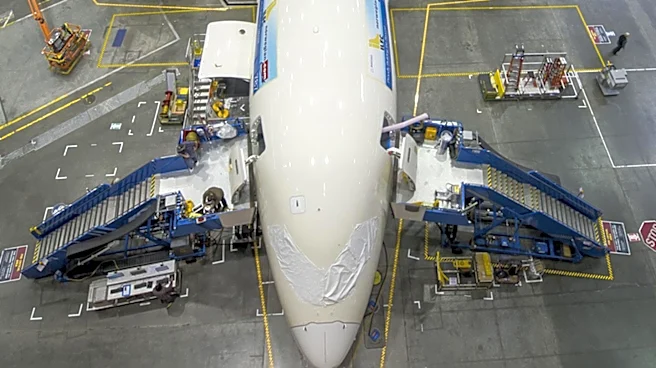
Boeing's immediate next steps involve implementing the planned workforce reductions, with layoff notices expected next month. The company will continue to review staffing levels across its commercial aircraft operations, leaving open the possibility of further job cuts. Production stabilization is a key focus, with Boeing aiming to reach a consistent output of 47 aircraft monthly in early 2027 before attempting to increase to 52 aircraft per month in the latter half of that year. A new 737 MAX production line is scheduled to open this summer in Everett, Washington, marking the first time 737s will be manufactured at that location. The company must demonstrate consistent production performance before any further rate increases are introduced. Stakeholders, including employees, unions, and airline customers, will closely monitor Boeing's progress in stabilizing its manufacturing processes and meeting its revised production targets.
Beyond the Headlines
The ongoing production challenges at Boeing extend beyond immediate financial and employment impacts, touching upon broader issues of supply chain resilience and manufacturing quality control within the aerospace sector. The difficulties in supplying enough wings and achieving expected efficiencies in manufacturing processes suggest systemic issues that could have long-term implications for Boeing's operational model and reputation. The company's decision to adjust ramp-up plans to allow factories and suppliers more time to stabilize operations indicates a recognition of these underlying issues. This situation could prompt a re-evaluation of production strategies across the industry, emphasizing sustainable growth over aggressive expansion targets. Furthermore, the repeated delays and workforce adjustments could impact employee morale and potentially affect future labor negotiations, even after SPEEA members recently approved a new labor agreement. The focus on consistent production performance before rate increases signals a shift towards prioritizing stability and quality, which could ultimately lead to a more robust manufacturing process in the long run.