





What's Happening?
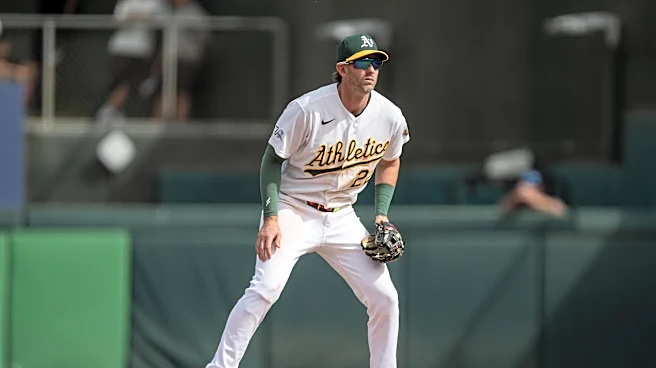
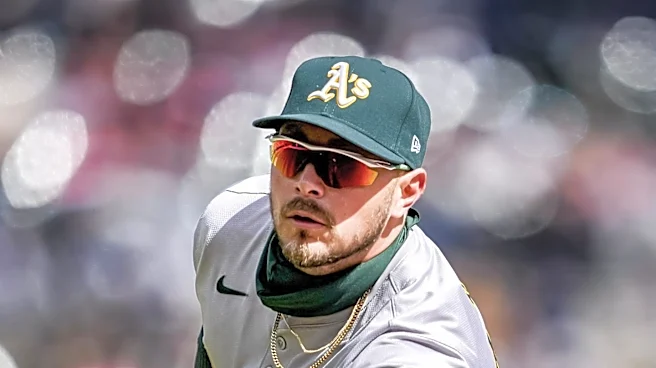
The Athletics have declined the $15 million club option for pitcher Jeffrey Springs for the 2027 season, opting instead for a $750,000 buyout. This decision makes Springs, who is 34 years old, a free agent. Springs was acquired by the Athletics from the Rays
in December 2024 to provide experienced stability to a young pitching rotation. While his first season with the Athletics in 2025 saw him log 171 innings with a 4.11 ERA, his performance significantly declined in 2026, where he posted a 6.18 ERA. This downturn, coupled with the team playing in a hitter-friendly minor league park, contributed to the decision to decline his option. The Athletics are now looking to explore other pitching options, potentially focusing more on the trade market due to the challenges of attracting free-agent pitchers to their current home park.
Why It's Important?
This move highlights the financial and strategic decisions faced by MLB teams, particularly those in transitional phases like the Athletics. Declining Springs' option, despite the need for pitching, underscores the team's assessment of his recent performance and age versus the significant financial commitment. For Springs, becoming a free agent at 34 after a challenging season means he will likely seek a deal in a more pitcher-friendly environment, potentially impacting his market value and the type of contract he secures. For the Athletics, this decision frees up salary but also necessitates finding reliable pitching to bolster a rotation that is currently projected to be young and inexperienced, featuring pitchers like Luis Severino, J.T. Ginn, Gage Jump, Jacob Lopez, and Luis Medina. The team's difficulty in signing free-agent pitchers due to their current ballpark conditions further complicates their roster construction efforts.
What's Next?
Jeffrey Springs will now enter the open market as a free agent, seeking a new team and a contract, ideally in a more favorable pitching environment. For the Athletics, the immediate next step involves actively searching for new pitching talent to fill the void left by Springs' departure. Given their challenges in attracting free agents to their current home park, the team is expected to focus more on the trade market to acquire arms. The Athletics' projected rotation for the upcoming season remains a key area of concern, and their ability to secure effective pitchers will be crucial for their competitiveness. This decision also signals a continued rebuilding or retooling phase for the Athletics as they navigate their temporary home and future move to Las Vegas.
Beyond the Headlines
The Athletics' decision regarding Jeffrey Springs reflects a broader trend in professional sports where age, performance, and financial considerations heavily influence roster decisions. The impact of a team's home stadium on player acquisition, particularly for pitchers, is a significant factor, as evidenced by the Athletics' struggles to sign free agents due to their hitter-friendly minor league park. This situation can lead to teams relying more on internal development or the trade market, which can have long-term implications for team building and competitiveness. Furthermore, the move highlights the precarious nature of player contracts, where even multi-year extensions can be cut short if performance declines, emphasizing the business side of professional baseball and the constant evaluation of player value.