


What's Happening?
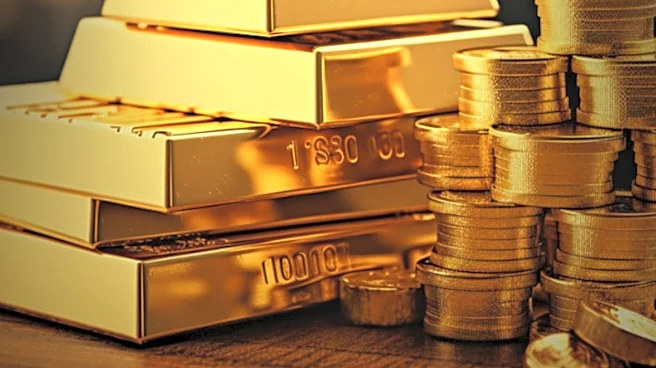
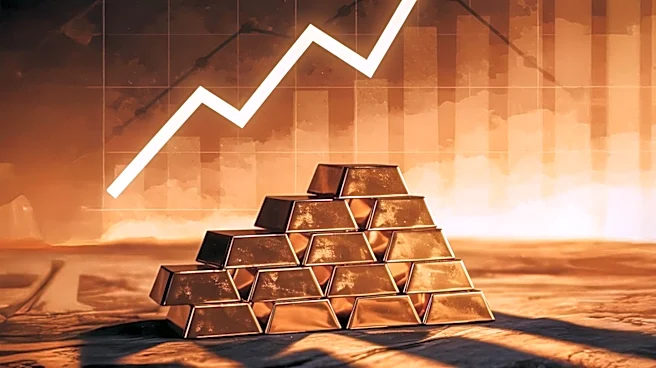
Gold prices have experienced a decline, with spot gold slipping below $3,500 per ounce during overnight intraday trading, reaching its lowest level since September 2025. This represents a roughly 37% decrease from its record high earlier this year. The
downturn is largely attributed to the latest Personal Consumption Expenditures (PCE) inflation data, which has reinforced market expectations for a Federal Reserve rate hike in December, diminishing the appeal of non-yielding assets like gold. Copper prices have also retreated sharply, falling to an 11-month low and bringing its cumulative decline this month to nearly 18.%. JPMorgan's latest metals outlook report suggests a recovery window for gold is likely to open gradually starting in the second quarter of next year, with prices potentially climbing back above $4,000 per ounce by mid-next year and reaching $4,500 in the fourth quarter of 2027.
Why It's Important?
The current decline in gold prices reflects the market's sensitivity to Federal Reserve monetary policy and inflation data. As interest rates rise, the opportunity cost of holding non-yielding assets like gold increases, making other investments more attractive. This trend impacts investors seeking safe-haven assets and those using gold as an inflation hedge. The sharp drop in copper prices, often seen as an economic bellwether, also signals broader concerns about industrial demand and economic growth, particularly in sectors like AI infrastructure. While data centers account for a limited share of total copper consumption, the market's reaction highlights the interconnectedness of various economic indicators and investor sentiment. JPMorgan's forecast for a future recovery in gold prices suggests that current pressures may be temporary, driven by short-term monetary policy expectations rather than fundamental long-term devaluation.
What's Next?
The market will closely monitor upcoming Federal Reserve decisions, particularly the anticipated rate hike in December, which will continue to influence gold's short-term trajectory. JPMorgan projects that oil prices will pull back to between $65 and $75 per barrel by the second quarter of next year, easing inflationary pressures and potentially allowing the Federal Reserve to pause rate hikes as early as the end of the first quarter. This scenario, coupled with recovering investment demand, is expected to drive gold prices upward. For silver, despite weak fundamentals and a projected market surplus, JPMorgan expects prices to stabilize from the second quarter of next year and rebound to the mid-$50 range by year-end, with the gold-to-silver ratio holding within the 80 to 90 range.
Beyond the Headlines
The current market dynamics for precious metals underscore a complex interplay of monetary policy, inflation, and industrial demand. The Federal Reserve's actions, driven by inflation data, have a ripple effect across various asset classes, challenging traditional safe-haven narratives. The decline in copper prices, linked to concerns about AI infrastructure investment, highlights the evolving nature of industrial demand and the potential for technological shifts to influence commodity markets. The long-term outlook for gold, as projected by JPMorgan, suggests that while short-term headwinds exist, underlying factors such as central bank purchases and demand for a hedge against currency debasement could support its value in the medium to long term. This indicates a potential re-evaluation of gold's role in diversified portfolios as economic conditions evolve.