






What's Happening?
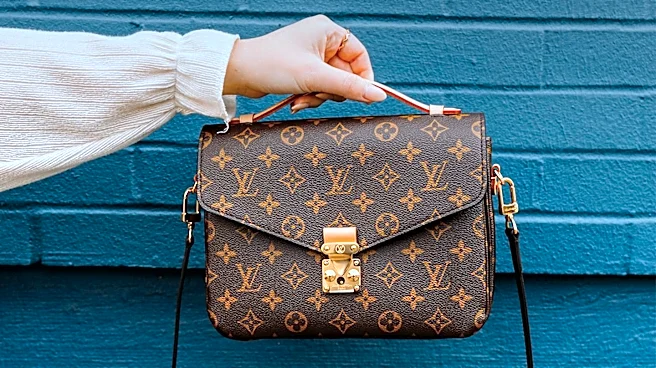
Louis Vuitton, a prominent luxury fashion house, is reportedly preparing for a leadership change in its mainland China operations. Daniel DiCicco, the regional head for China, may be departing from his role less than two years after his appointment. This
potential change comes as Louis Vuitton's parent company, LVMH, is experiencing a significant decline in sales within the crucial Chinese market. Sources familiar with the matter indicate that LVMH is dissatisfied with the brand's performance in the region, and DiCicco also has personal preferences contributing to the proposed departure. The luxury group is reportedly exploring a new role for DiCicco in Japan, where his family resides. LVMH Moët Hennessy Louis Vuitton SE has declined to comment on the matter, and DiCicco has not responded to requests for comment.
Why It's Important?
This leadership change at Louis Vuitton underscores the growing challenges faced by luxury brands in the Chinese market. China has historically been a key growth driver for the luxury sector, and a sales slump there can significantly impact global revenue for companies like LVMH. The reported dissatisfaction with performance suggests that even established luxury brands are struggling to navigate evolving consumer preferences, a sluggish economy, and a weakened stock market in China. This situation highlights a broader downturn in China's high-end consumer market, which is also affected by Beijing's tax crackdown. The departure of a regional head after a short tenure signals the urgency with which LVMH is addressing these market pressures, indicating a potential shift in strategy to regain momentum in this vital region.
What's Next?
The immediate next step for Louis Vuitton will likely involve the formal announcement of Daniel DiCicco's departure and the appointment of a new regional head for mainland China. This new leadership will face the significant challenge of revitalizing sales and market share amidst a difficult economic climate and changing consumer behavior in China. The company may also implement new marketing strategies, product offerings, or operational adjustments to better align with the current demands of the Chinese luxury consumer. Furthermore, the potential relocation of DiCicco to a role in Japan suggests LVMH might be re-evaluating its regional leadership structure and talent deployment across Asia to optimize performance in different markets.
Beyond the Headlines
The situation at Louis Vuitton reflects a broader trend of increasing volatility and complexity in the global luxury market, particularly concerning its reliance on China. The slowdown in China, coupled with a nationalist backlash following a trademark infringement case involving Louis Vuitton and a local beverage chain, indicates that luxury brands must navigate not only economic headwinds but also cultural and political sensitivities. This development could prompt other luxury brands to re-evaluate their strategies for the Chinese market, potentially leading to more localized approaches, increased investment in understanding local consumer sentiment, and a more cautious stance on legal disputes that could trigger public backlash. The long-term implication could be a diversification of focus away from an over-reliance on China, as brands seek more stable growth avenues.