




What's Happening?
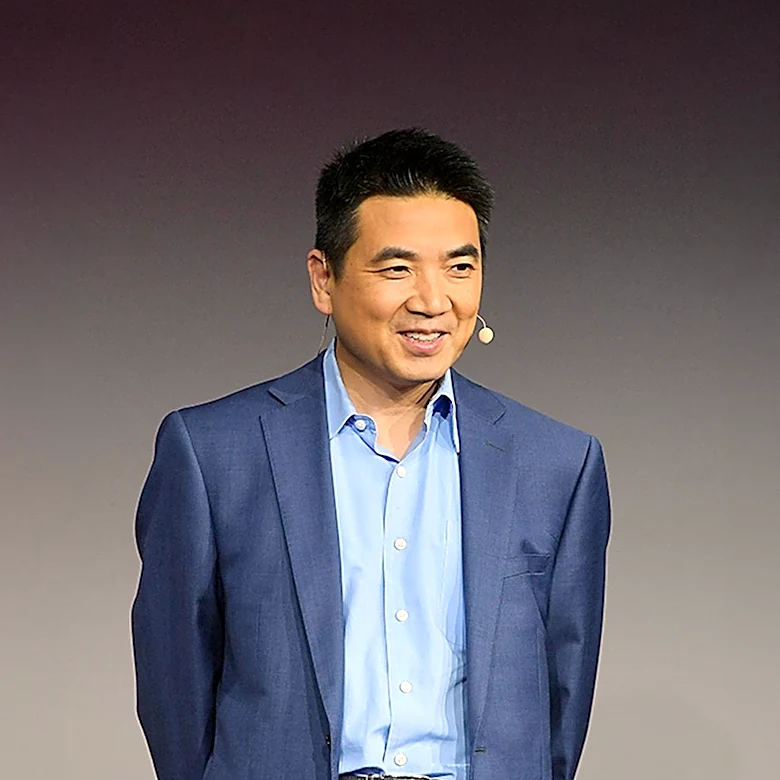
D-Wave Quantum CEO Alan Baratz has asserted that no quantum computing company has yet produced a logical qubit meeting the fault tolerance standard of successfully running at least one million gate operations. This statement was made during the company's
third-quarter call. Baratz's definition of a useful logical qubit sets a high bar for the industry. While D-Wave itself has not yet achieved this milestone, its roadmap projects the delivery of its first fully error-corrected, fault-tolerant logical qubit by 2028, with 100 such qubits targeted for 2032. Other major players in the quantum computing space, such as Google and IBM, also list fault-tolerant logical qubits as future objectives. Quantinuum, another company, has come close to Baratz's standard for memory, but gates remain a more significant challenge. D-Wave's third-quarter revenue increased by 21% to $4.5 million, with cloud access to its annealing machines contributing $2.2 million, a 56% rise. Bookings for the quarter, however, fell by 19%.
Why It's Important?
This declaration by D-Wave's CEO highlights a critical benchmark in the nascent quantum computing industry: the development of truly fault-tolerant logical qubits. Achieving this standard is crucial for quantum computers to move beyond experimental stages and become practical tools for complex problem-solving. The race to develop these advanced qubits has significant implications for U.S. technological leadership and economic competitiveness. Companies that successfully develop fault-tolerant quantum systems stand to gain a substantial advantage in fields like drug discovery, materials science, and financial modeling. D-Wave's current revenue, largely driven by its annealing technology, underscores the financial challenges and investment required to pursue gate-model quantum computing. The company's stock performance, which saw a 72% decline this year and trades at a high forward sales multiple, reflects the speculative nature of the industry and the market's anticipation of future breakthroughs rather than current profitability.
What's Next?
D-Wave's roadmap indicates its first fully error-corrected, fault-tolerant logical qubit is expected in 2028, followed by 100 such qubits in 2032. The company's immediate financial performance will be closely watched, particularly regarding its ability to convert its backlog into revenue. A significant portion of its expected revenue for the coming year depends on the timely shipment of a $20 million annealing system to Florida Atlantic University. Analysts anticipate D-Wave's revenue to roughly double in each of the next two years, suggesting a critical period for the company to demonstrate progress on its technological and financial goals. The broader quantum computing industry will continue to focus on error correction and the development of stable, scalable logical qubits, with companies like IBM and Google also setting ambitious targets for the coming years. The competition to be the first to deliver a scalable fault-tolerant gate model system will intensify.
Beyond the Headlines
The debate over the definition and achievement of a 'logical qubit' points to a deeper challenge within the quantum computing sector: the need for standardized metrics and clear communication regarding technological advancements. The complexity of quantum mechanics often leads to varying interpretations of progress, which can confuse investors and the public. The high valuation of D-Wave's stock, despite its current financial performance and the early stage of its gate-model development, illustrates the significant speculative investment in the potential of quantum computing. This speculative environment could lead to both rapid innovation and potential market volatility. The long-term implications of successful fault-tolerant quantum computing extend to national security, economic disruption, and the potential for solving problems currently intractable for classical computers, fundamentally reshaping various industries and scientific research.