







What's Happening?
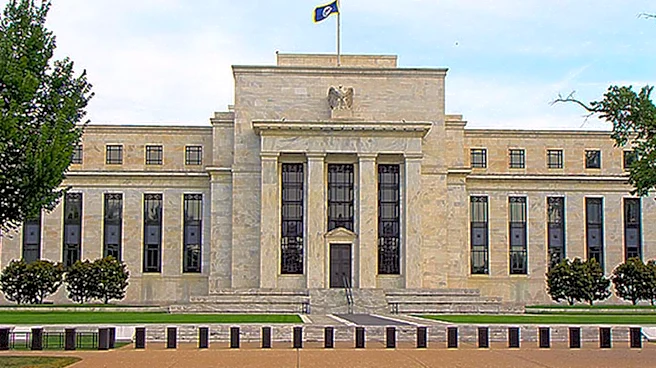
The Federal Reserve Board has finalized changes to its stress testing framework, aiming to enhance transparency and public accountability. This move is intended to reduce volatility in stress test-related capital requirements for banks. Governor Lisa
D. Cook highlighted that rigorous stress testing is crucial for the strength and stability of the U.S. banking system. The framework, which has been a critical supervisory tool since the Supervisory Capital Assessment Program (SCAP) in 2009, provides data for assessing financial stability risks and allows banks to analyze their specific risks across various macroeconomic environments. The Board believes that disclosing banks' performance and detailed scenario information will build market confidence in the resilience of the U.S. banking system against adverse scenarios. The new framework also includes policy design features to maintain the rigor of stress tests and reduce the potential for 'gaming' or 'window-dressing' behavior by institutions.
Why It's Important?
These changes are important for maintaining the stability and public confidence in the U.S. banking system. By increasing transparency, the Federal Reserve aims to provide market participants and the public with a clearer understanding of how banks would perform under stressful economic conditions. This can prevent unexpected financial shocks and foster a more resilient financial environment. The reduction in volatility of capital requirements could also provide more predictability for financial institutions, potentially influencing their lending practices and investment decisions. Governor Cook's emphasis on the importance of rigorous testing underscores the Federal Reserve's commitment to proactive risk management, which is vital for safeguarding the broader economy from potential banking crises. The framework's ability to deter 'gaming' behavior ensures that stress tests remain an effective and credible tool for assessing financial health.
What's Next?
The Federal Reserve will continue to administer its stress testing regime with the enhanced framework. The Board will remain vigilant to ensure that the scenarios used in stress tests are sufficiently rigorous to maintain market confidence. There is also consideration for using exploratory stress scenarios, which would not directly affect regulatory capital but would provide valuable information to supervisors and banks by examining a wider range of economic conditions. This approach aims to keep the stress testing program dynamic and informationally rich. The ongoing commitment to rigorous and transparent stress testing suggests that the Federal Reserve will continue to adapt its supervisory tools to address evolving financial risks and maintain the resilience of the U.S. banking sector.
Beyond the Headlines
The Federal Reserve's continuous refinement of its stress testing framework reflects a broader commitment to financial stability post-2008 crisis. This initiative goes beyond mere regulatory compliance; it aims to embed a culture of robust risk management within the banking sector. The focus on transparency and public accountability also touches upon the ethical dimension of financial oversight, ensuring that the public has confidence in the institutions that underpin the economy. The potential use of exploratory stress scenarios highlights a forward-looking approach, anticipating future economic challenges rather than merely reacting to past ones. This proactive stance could lead to a more adaptive and robust financial system, capable of withstanding unforeseen shocks and contributing to long-term economic health.