






What's Happening?
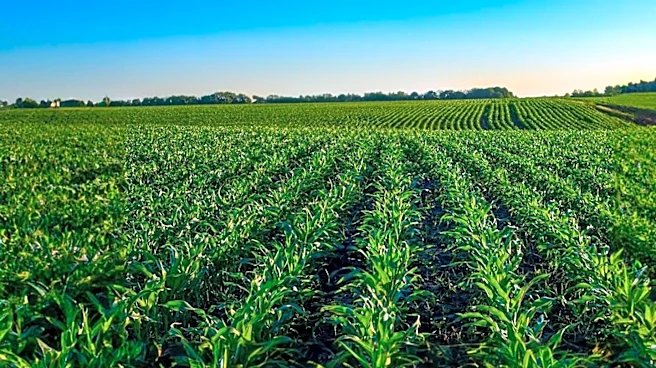
Researchers at the University of Missouri are leveraging artificial intelligence to improve planting decisions for corn farmers. The study focuses on using AI to create variable-rate seeding (VRS) plans that adjust seed populations based on specific field
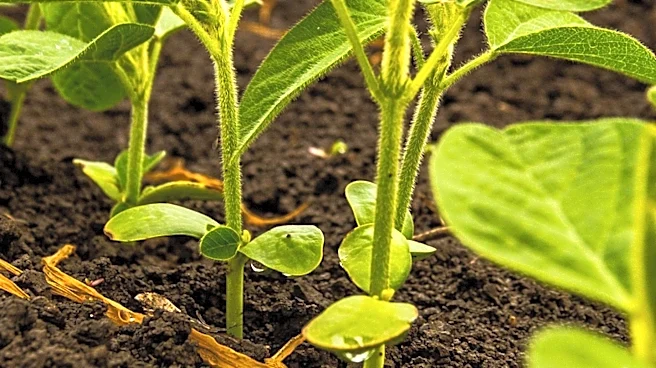
conditions. This approach allows for more precise planting, taking into account soil characteristics, elevation, and historical crop yield data. The AI model helps farmers optimize seed rates and adjust fertilizer and crop protection usage, leading to cost savings and better environmental stewardship. The technology has shown promising results in corn production, although soybean performance remains more challenging due to weather variability.
Why It's Important?
The integration of AI in agriculture represents a significant advancement in precision farming, offering potential cost reductions and increased yields for farmers. By optimizing resource use, AI-driven tools can enhance environmental sustainability by minimizing unnecessary chemical applications, thus protecting soil and water quality. This technology could revolutionize farming practices, making them more data-driven and efficient, which is crucial for meeting the growing global food demand. Farmers stand to benefit from reduced input costs and improved crop management, while society gains from more sustainable agricultural practices.
What's Next?
The research team plans to continue evaluating the AI technology at the University of Missouri's Digital Agriculture Research and Extension Center. Future developments may include expanding the AI model to other crops and refining its predictive capabilities. As the technology matures, it could see broader adoption across the agricultural sector, potentially influencing policy and investment in smart farming technologies. Stakeholders such as agricultural businesses, policymakers, and environmental groups may engage in discussions on the implications of AI in farming.