





What's Happening?
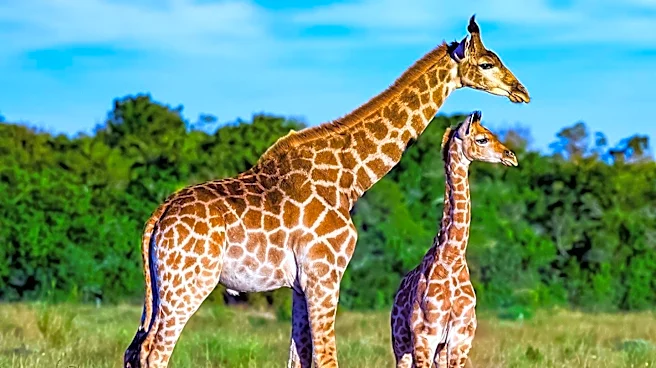
A premature baby giraffe named Milani is defying expectations at Tanganyika Wildlife Park in Kansas after surviving an emergency C-section. The procedure was performed when Milani's mother, Virtue, experienced organ failure during pregnancy, leaving veterinarians
with no choice but to perform a terminal cesarean section. Despite the odds, Milani has reached significant milestones, such as standing and feeding independently. The calf is receiving round-the-clock care, including plasma transfusions to compensate for the lack of maternal antibodies. The park has been providing updates on Milani's progress, highlighting the collaborative efforts of the veterinary team and the support from the giraffe herd.
Why It's Important?
Milani's survival story is a testament to the advancements in veterinary medicine and the dedication of wildlife conservationists. The successful care of a premature giraffe through such a challenging procedure underscores the importance of specialized veterinary expertise in wildlife parks. This case also highlights the ethical considerations involved in wildlife management, where difficult decisions must be made to save animal lives. Milani's story has captured public interest, raising awareness about the challenges faced by wildlife in captivity and the efforts required to ensure their well-being.
Beyond the Headlines
The situation at Tanganyika Wildlife Park reflects broader themes in wildlife conservation, such as the role of human intervention in animal survival. The park's efforts to save Milani demonstrate the potential for collaboration between veterinary science and conservation practices. This case may inspire further research into neonatal care for wildlife, potentially improving outcomes for other species. Additionally, Milani's story serves as a reminder of the emotional and ethical complexities involved in caring for animals in captivity, prompting discussions about the responsibilities of wildlife parks and zoos.