


What's Happening?
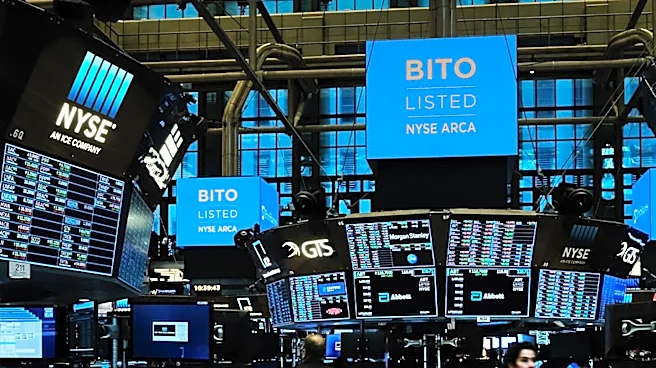
Marc Lore, founder of Wonder, is actively consolidating food brands and infrastructure, having acquired nine companies since its 2018 inception. Wonder, which was valued at $9 billion in July and confidentially filed for an IPO on November 5, aims to
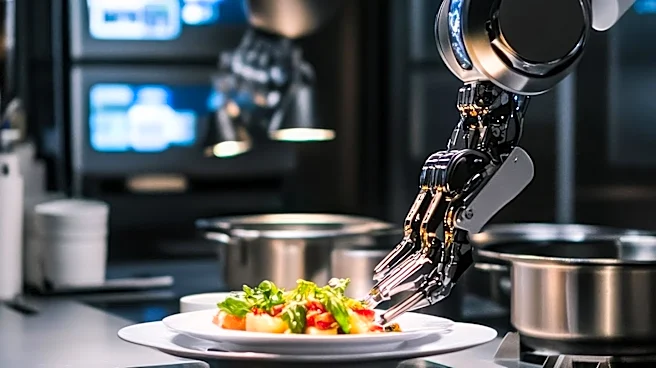
go public to raise capital and facilitate further acquisitions. Notable acquisitions include Grubhub for $650 million, significantly less than the $7.3 billion Just Eat Takeaway paid in 2021, and Blue Apron for $103 million, which had an IPO valuation of $1.9 billion in 2017. Wonder also acquired Tastemade for approximately $90 million and Spyce, a kitchen robotics company, for $186 million. The Spyce acquisition is particularly strategic, intended to automate Wonder's operational model. Lore's strategy involves integrating these brands into a single platform encompassing 170 locations, meal kits, media, delivery services, and robotics.
Why It's Important?
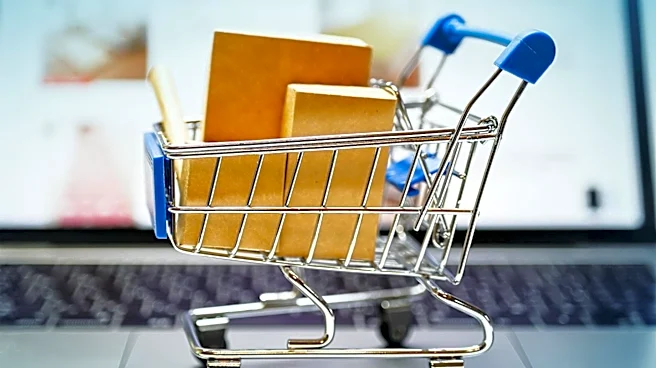
Wonder's aggressive acquisition strategy and impending IPO signal a significant shift in the U.S. food delivery and meal preparation landscape. By acquiring established, albeit struggling, brands at reduced prices, Wonder aims to create a dominant 'Amazon of mealtime.' This approach could lead to increased competition for existing food delivery services and traditional restaurants, potentially driving down costs for consumers through economies of scale and automation. However, investor materials project nearly $2 billion in revenue this year against a $618 million EBITDA loss and an estimated $2.7 billion cash burn before the business is expected to self-fund around 2030. This substantial cash burn raises questions about the long-term financial viability and sustainability of Wonder's model, potentially impacting investors and the broader market for food-related startups.
What's Next?
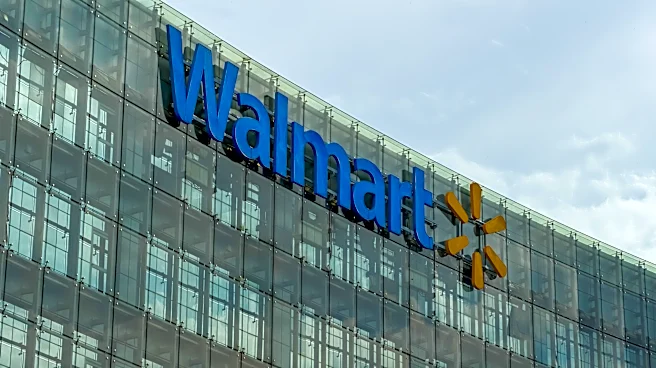
Wonder is preparing for its initial public offering, which is intended to secure the necessary capital to sustain its operations and fund future acquisitions. Concurrently, the company is reportedly exploring options for Grubhub, sounding out potential buyers such as Walmart, Target, and Kroger. The outcome of these discussions and the success of Wonder's IPO will be critical in determining its future trajectory. If successful, Wonder could continue its expansion, further consolidating the food delivery and meal kit markets. Conversely, failure to secure sufficient funding or offload Grubhub could exacerbate its cash burn issues, potentially leading to financial instability and a re-evaluation of its ambitious growth strategy.
Beyond the Headlines
The strategy employed by Marc Lore and Wonder, often referred to as the 'Bending Spoons playbook,' involves acquiring distressed assets at low prices and integrating them into a unified platform. This approach highlights a broader trend in the U.S. business landscape where well-capitalized entities are consolidating fragmented industries. The focus on automation, particularly through the acquisition of Spyce, suggests a long-term vision for efficiency and cost reduction in the food sector, potentially leading to job displacement in traditional food service roles. The significant projected cash burn also raises ethical considerations regarding investor risk and the sustainability of growth models heavily reliant on continuous capital infusion, prompting scrutiny from financial regulators and market analysts regarding the true value and potential of such ventures.