









What's Happening?
Scotland's chances of advancing to the World Cup knockout stage have drastically decreased to 0.07% following a series of unfavorable results. After a 3-0 loss to Brazil, Scotland's position weakened with a goal difference of -3. Initially, they had a 42.7%
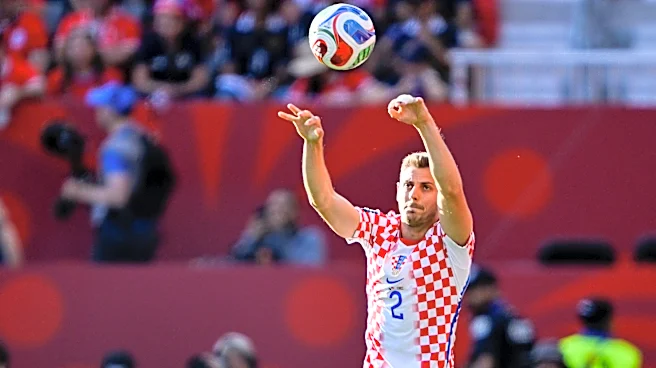
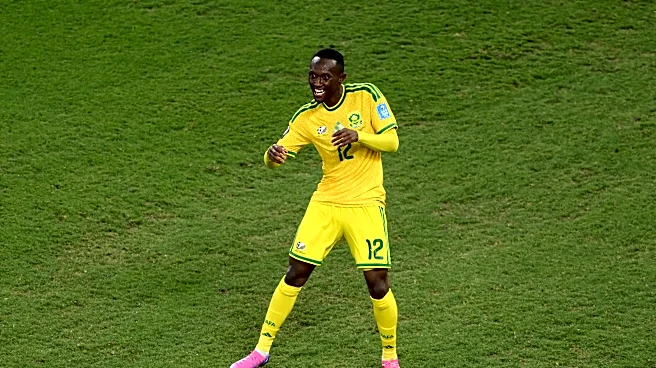
chance of being among the top eight third-placed teams. However, victories by South Africa and Ecuador, along with a draw between Sweden and Japan, further reduced their chances. The situation worsened after Senegal's 5-0 win over Iraq and a 1-1 draw between Iran and Egypt. To advance, Scotland now requires Ghana to defeat Croatia by at least three goals, Uzbekistan to win or draw against Congo DR without exceeding a four-goal margin, and Austria to beat Algeria by two or more goals.
Why It's Important?
The diminishing prospects for Scotland highlight the competitive nature of the World Cup and the impact of goal differences and other teams' performances on a nation's progression. For Scotland, failing to advance would mean missing out on the economic and cultural benefits associated with deeper tournament participation, such as increased visibility and potential sponsorships. The situation underscores the importance of strategic play and the influence of external results on a team's fate. For fans and stakeholders, the outcome could affect national morale and future investments in the sport.
What's Next?
Scotland's path to the knockout stage is now dependent on a series of specific outcomes in other matches. If these results do not materialize, Scotland will exit the tournament, prompting a reassessment of their strategies and performance. The team and its supporters will be closely monitoring the upcoming matches involving Ghana, Croatia, Uzbekistan, Congo DR, Austria, and Algeria. Should Scotland advance, they would likely face formidable opponents such as Mexico, Germany, or France, presenting further challenges.