





What's Happening?
The modern office landscape is evolving to prioritize human-centric design, particularly in response to hybrid work models. This shift moves away from traditional efficiency-focused layouts towards creating diverse spaces that cater to various work styles.
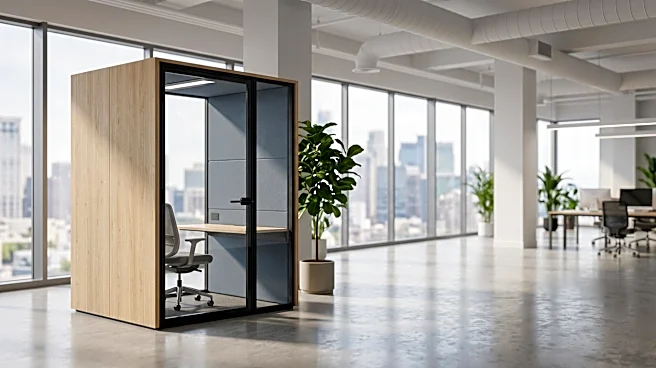
Key to this new approach is the integration of 'quiet focus rooms' alongside collaborative hubs, informal lounges, and private spaces. The goal is to provide employees with the flexibility to choose environments that best suit their tasks, whether it's deep concentration, collaboration, or confidential conversations. This design philosophy acknowledges that different activities require different settings and that supporting both collaboration and solitude is crucial for employee well-being and productivity. The emphasis is on creating offices that people choose to work in, rather than being compelled to, by offering environments that foster connection and cater to individual needs.
Why It's Important?
This trend in office design holds significant importance for U.S. businesses and their workforce. By incorporating quiet focus rooms and other varied spaces, companies can enhance employee satisfaction and productivity. Neurodivergent individuals, tired executives, and those needing a break from constant stimulation can benefit greatly from designated calm areas, reducing stress and improving focus. This approach can lead to a more inclusive work environment, attracting and retaining diverse talent. Furthermore, by prioritizing employee well-being and offering flexible work settings, businesses can foster a stronger company culture and improve overall morale. The investment in human-centric design, including elements like natural light, greenery, and good acoustics, signals a long-term commitment to employees, potentially leading to increased engagement and reduced turnover in a competitive labor market.
What's Next?
As hybrid work models continue to solidify, the demand for offices that offer a range of environments, including quiet rooms, is expected to grow. Businesses will likely continue to invest in redesigning their physical spaces to align with these human-centric principles. This could involve reconfiguring existing office layouts, incorporating modular furniture, and integrating more natural elements. The focus will be on creating adaptable spaces that can evolve with changing work needs and preferences. We may see an increase in specialized design firms focusing on these flexible and inclusive office solutions. Additionally, companies might implement feedback mechanisms to understand how employees utilize these new spaces, further refining their office designs to maximize comfort and productivity.
Beyond the Headlines
The shift towards human-centric office design, particularly the emphasis on quiet rooms, reflects a deeper societal recognition of the importance of mental well-being and individual needs in the workplace. It challenges the long-held corporate ideal of open-plan offices as the sole driver of collaboration, acknowledging that constant stimulation can be detrimental to focus and creativity for many. This evolution in design also highlights a growing understanding of neurodiversity and the need to create environments that accommodate a wider range of cognitive styles. Beyond mere aesthetics, these design choices can foster a culture of empathy and support, where employees feel valued and understood. This could lead to a broader re-evaluation of workplace norms, encouraging more flexible schedules and a greater emphasis on work-life balance, ultimately contributing to a more sustainable and humane work culture.