





What's Happening?
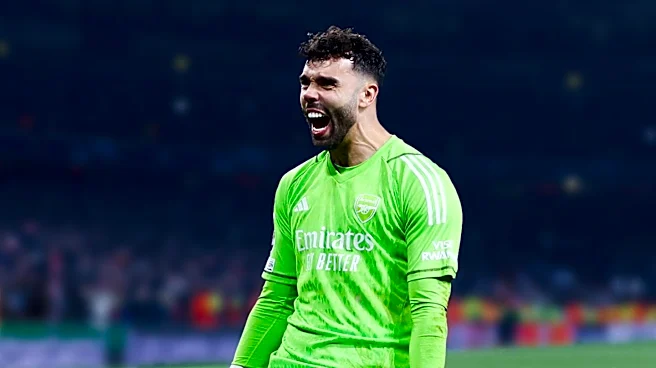
Arsenal goalkeeper David Raya admitted the team was surprised by Slavia Praha's intensified performance in the second half of their recent Champions League match. Despite securing a 2-1 victory, Arsenal, who had established a 2-0 lead in the first half,
faced significant pressure after the interval. Raya noted that Slavia Praha 'put up a gear' and made the game 'really difficult' for the Gunners, employing a man-to-man marking strategy across the pitch. This shift in momentum forced Arsenal to struggle with possession and commit uncharacteristic errors. The match served as a crucial learning experience for Arsenal, highlighting the challenges of maintaining control in away European fixtures when opponents adjust their tactics and increase their intensity. The team's ability to adapt to such changes will be vital for their progression in the competition.
Why It's Important?
This event underscores the unpredictable nature of top-tier European football and the importance of tactical flexibility for leading clubs like Arsenal. While Arsenal secured the win, the second-half performance against Slavia Praha exposed potential vulnerabilities in their ability to manage pressure and adapt to aggressive opposition tactics. For Arsenal, this serves as a critical lesson as they aim for deeper runs in the Champions League, where every opponent is capable of mounting a strong challenge. The experience highlights that even after a dominant first half, complacency or an inability to counter an opponent's tactical shift can lead to precarious situations. This match could influence Arsenal's future game strategies, particularly in away fixtures, prompting a greater focus on maintaining intensity and tactical discipline throughout the entire 90 minutes.
What's Next?
Following this match, Arsenal will likely review their second-half performance against Slavia Praha to identify areas for improvement, particularly concerning their response to increased opposition pressure and tactical adjustments. The coaching staff may focus on drills and strategies designed to help the team maintain possession under duress and adapt more effectively to man-to-man marking schemes. This experience could influence team selections and tactical approaches in upcoming Champions League fixtures, especially in away games where hostile environments and determined opponents are common. Arsenal's ability to learn from this 'surprise' and implement necessary changes will be crucial for their success as they navigate the demanding schedule and competitive landscape of European football.
Beyond the Headlines
The match against Slavia Praha offers a deeper insight into the psychological and tactical demands of Champions League football. Beyond the immediate result, it highlights how a team's mental fortitude and adaptability are as crucial as their technical skill. Arsenal's initial dominance followed by a period of struggle against a resurgent opponent illustrates the fine margins in elite competitions. This scenario can serve as a valuable case study for sports psychology, demonstrating how momentum shifts can impact team performance and decision-making under pressure. For Arsenal, understanding and mitigating these psychological factors will be key to developing a more resilient and consistently high-performing squad capable of competing for major European honors.