





What's Happening?
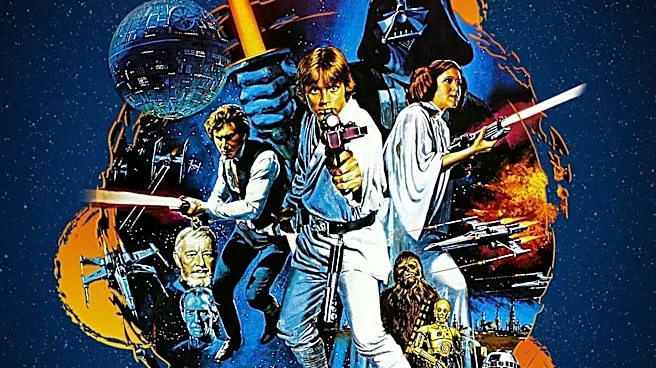
Marvel Comics' 'Star Wars' issue #10 is being re-examined, highlighting its departure from the established film canon and its resemblance to a space western. Originally, editor Roy Thomas secured the deal for Marvel to adapt 'Star Wars,' with George Lucas
personally requesting Thomas and artist Howard Chaykin. After the initial six-issue adaptation of the film, new stories were developed, as the only existing canon at the time was the first movie. Roy Thomas reportedly lifted the plot of 'The Magnificent Seven'/'Seven Samurai' for the first new story arc, featuring Han Solo and Chewbacca protecting a village from Cloud Raiders. This storyline introduced new characters like the anthropomorphic green rabbit-alien Jaxxon, a faux Jedi named Don-Wan Kihotay, and the Starkiller Kid. The villain, Serji-X Arrogantus, was a parody of Sergio Aragones. By issue #10, both Thomas and Chaykin were reportedly ready to move on, leading to Don Glut taking over scripting and Tom Palmer finishing Chaykin's breakdowns. The comic's narrative in this period felt more like a generic space adventure than a direct continuation of the 'Star Wars' universe, incorporating elements that could have fit other Marvel licensed properties like 'John Carter, Warlord of Mars' or 'Tarzan' with minor adjustments.
Why It's Important?
This historical perspective on Marvel's early 'Star Wars' comics is important for understanding the evolution of the franchise's expanded universe and the role of licensed properties in comic book publishing. At a time when the first 'Star Wars' film was the sole source of canon, Marvel's comics were the primary avenue for fans to experience new adventures with Luke Skywalker and Han Solo. The creative freedom taken by writers like Roy Thomas, who essentially 'made up a bunch of new stuff,' laid groundwork for future expanded universe content, even if it diverged significantly from the film's tone and style. The commercial success of these comics was substantial, reportedly helping to sustain Marvel during a sales downturn. This demonstrates the significant economic impact that popular licensed properties can have on publishing houses. The comparison to other Marvel properties like 'John Carter, Warlord of Mars' underscores the challenge and opportunity in adapting a new, immensely popular cinematic universe into a different medium while maintaining its unique identity.
What's Next?
While this specific comic issue is a historical artifact, its re-evaluation contributes to ongoing discussions about canon, adaptation, and creative interpretation within major franchises. For current and future 'Star Wars' content creators, this serves as a case study in how early attempts to expand the universe were received and how they shaped fan expectations. The legacy of these early comics, including their more 'space western' feel, might influence future storytelling approaches that seek to explore different genres within the 'Star Wars' universe. For comic book historians and fans, it encourages a deeper look into the creative decisions made during the nascent stages of the 'Star Wars' expanded universe, offering insights into the challenges of building a cohesive narrative across different media before a comprehensive canon was established. The continued interest in these older stories also highlights the enduring appeal of the 'Star Wars' brand and its capacity for diverse interpretations.
Beyond the Headlines
The early Marvel 'Star Wars' comics, particularly issue #10, offer a fascinating glimpse into the nascent stages of a cultural phenomenon before the concept of a tightly controlled, multi-platform canon became prevalent. The creative team's approach, which involved borrowing plotlines from classic narratives like 'The Magnificent Seven' and introducing characters that felt more at home in a generic space adventure, reflects a different era of media adaptation. This period predates the rigorous oversight often seen in modern franchises, where every new story is meticulously vetted for its adherence to established lore. The fact that these comics were the only source of new 'Star Wars' content for a time highlights their significant, albeit sometimes unconventional, role in shaping early fan perceptions. It also raises questions about the balance between creative freedom and canonical fidelity in expanding beloved universes, a tension that continues to resonate in today's media landscape. The commercial success despite the narrative deviations suggests that the sheer demand for more 'Star Wars' content outweighed strict adherence to the film's specific tone at the time.