
What's Happening?
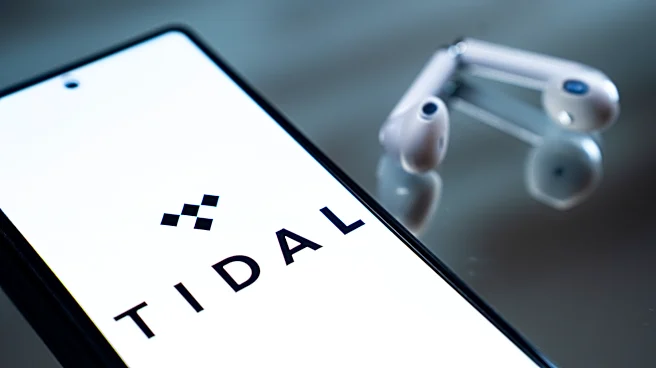
Tidal, a music streaming service, announced on Tuesday, November 24, that it will completely ban AI-generated music from its platform starting December 9. This decision follows an earlier move in July
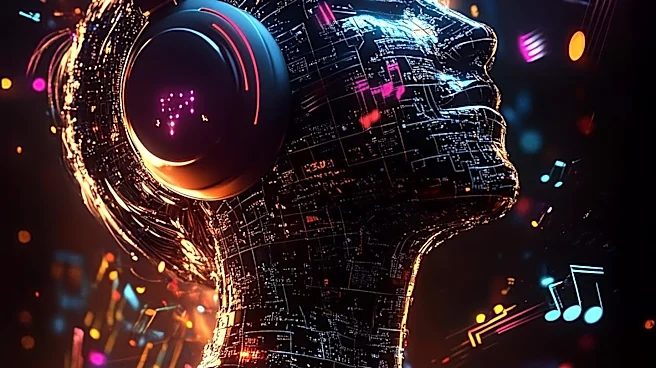
to demonetize and label AI music, requiring distributors to identify such tracks. Tidal plans to remove any songs that distributors confirm were created solely with AI tools. To enforce this policy, the company will utilize its partnership with Ircam Amplify, a French AI music detection tool. According to Tidal, 94% of AI-badged tracks on its platform originated from Suno. A blog post from the company indicated that as of November 6, 60% of daily song submissions were AI-generated, and 96% of these AI-generated songs received no streams over the past three months. Tidal also reported removing 66,000 tracks suspected of artist impersonation. However, songs created with AI assistance but not entirely AI-generated will still be permitted.
Why It's Important?
Tidal's decision marks a significant shift in the music streaming industry, making it the first major service to implement a full ban on AI-generated music. This move could set a precedent for other platforms grappling with the rise of AI in content creation. The ban aims to protect human artists from being overshadowed by AI-generated content and to combat issues like spam, impersonation, and streaming fraud. By removing tracks that receive no streams, Tidal is also addressing content clutter and ensuring that its platform prioritizes music that resonates with listeners. This policy could influence how distributors and AI music creators operate, potentially pushing them towards more transparent labeling and ethical AI use. The emphasis on human-made music could also bolster the value of traditional artistry in an increasingly automated landscape.
What's Next?
The implementation of Tidal's ban on December 9 will be closely watched by the music industry, artists, and other streaming services. It remains to be seen how effectively Tidal can enforce this policy, especially with the continuous evolution of AI music generation tools. Other platforms like Spotify, Deezer, and Apple Music, which have explored labeling or regulating AI music without a full ban, may re-evaluate their strategies based on Tidal's experience. The debate over AI's role in creative industries is likely to intensify, with discussions focusing on intellectual property, artist compensation, and the definition of 'original' content. This move could also spur further development in AI detection technologies and potentially lead to new industry standards for AI-assisted music.
Beyond the Headlines
Tidal's ban on AI-generated music highlights a broader ethical and philosophical challenge posed by artificial intelligence in creative fields. The company's stance suggests a prioritization of human creativity and authenticity over algorithmic output, raising questions about the intrinsic value of art. This decision could spark a larger conversation about the future of artistic expression, the role of technology in creation, and the potential for AI to dilute or enhance human artistry. It also touches upon the legal complexities of copyright and ownership in an era where machines can generate content that mimics human work. The move could foster a 'human-first' movement within the arts, encouraging consumers to support content created by human artists and prompting platforms to differentiate between human and AI-generated works more clearly.