

What's Happening?
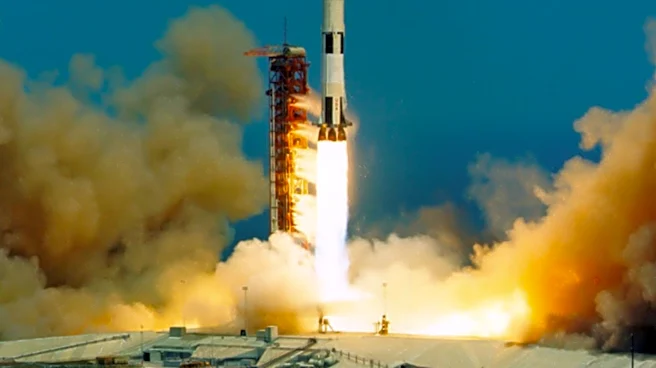
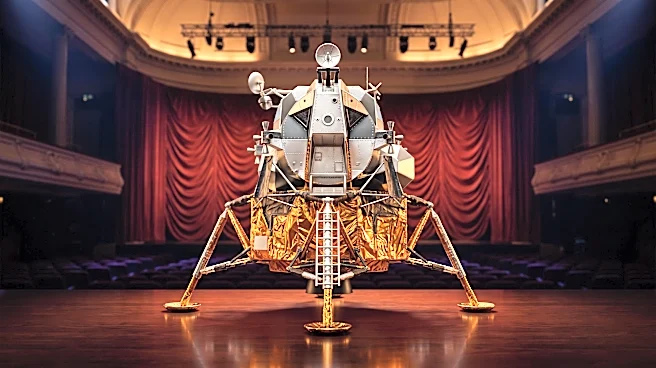
PBS is set to broadcast 'We Chose To Go To The Moon,' a new 'living documentary' that explores America's space race. The special, created and narrated by historian John Monsky, blends live music, storytelling, archival footage, and personal accounts to recount
the dramatic journey to land a man on the Moon. It features perspectives from key figures including Apollo 11 astronaut Michael Collins, Neil Armstrong, Buzz Aldrin, and Ed White, as well as engineers like Poppy Northcutt and Katherine Johnson, and the astronauts' families. The production, filmed at Carnegie Hall, includes performances by Broadway vocalists and a 45-piece orchestra, with an introduction by Academy Award-winning director Ron Howard. A new musical performance clip of 'Aquarius' from the show has been released ahead of its national broadcast premiere on November 10, 2026, at 8:00 p.m. ET on PBS, PBS.org, and the PBS app.
Why It's Important?
This broadcast is significant as it offers a fresh, immersive perspective on one of America's most ambitious historical achievements. By combining theatrical elements with historical narrative, it aims to engage a broad audience, including younger generations, with the story of the space race. The inclusion of personal stories from astronauts like Michael Collins, engineers, and their families humanizes the monumental scientific and technological endeavor, highlighting the human courage, sacrifice, and ingenuity involved. The timing of the broadcast, on the eve of Veterans Day, also underscores the service of many Apollo astronauts who were veterans, connecting their space exploration efforts to a broader theme of national service. This production reinforces the cultural impact of the Moon landing and its enduring legacy in American history and innovation.
What's Next?
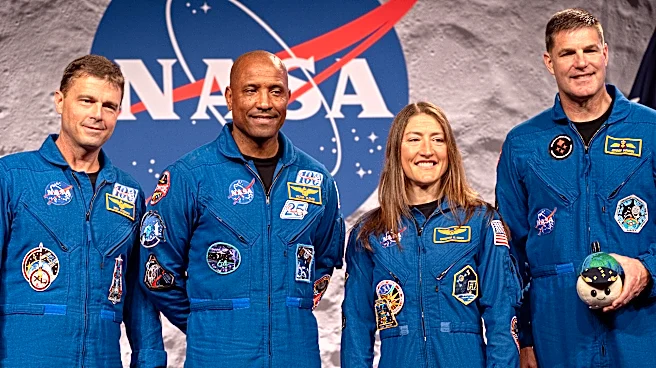
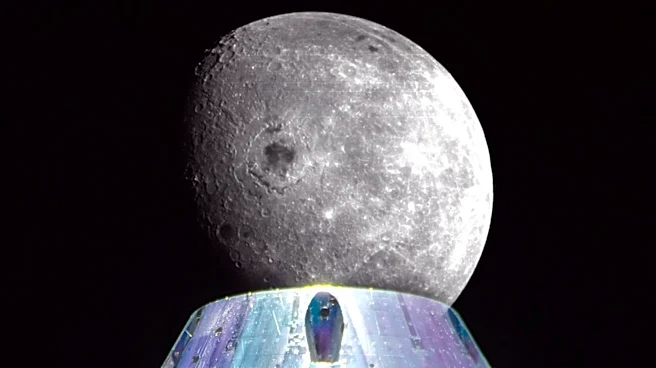
Following its national broadcast premiere on PBS, PBS.org, and the PBS app, 'We Chose To Go To The Moon' will be available for streaming on all station-branded PBS platforms. This accessibility will allow a wider audience to engage with the historical narrative and artistic presentation beyond the initial broadcast. The program's release coincides with the Artemis II mission, potentially drawing parallels between past and future lunar explorations and sparking renewed interest in space programs. The special's multi-platform availability ensures its continued impact as an educational and cultural resource, potentially inspiring discussions about scientific ambition, historical preservation, and the role of arts in recounting national achievements.
Beyond the Headlines
The 'living documentary' format of 'We Chose To Go To The Moon' represents an innovative approach to historical storytelling, moving beyond traditional documentaries to create an immersive experience. This method could influence how historical events are presented to the public, emphasizing emotional engagement and artistic interpretation alongside factual accuracy. The production's focus on the personal narratives of those involved, including the often-overlooked contributions of engineers and families, enriches the historical record and provides a more holistic understanding of the space race. Furthermore, by featuring music from the era, the special connects the scientific endeavor to the broader cultural and social context of the time, illustrating how major national projects are intertwined with the prevailing zeitgeist and popular culture.