






What's Happening?
Colombian singer Karol G's early career and personal life before achieving widespread fame have been highlighted, revealing her journey from a backup singer to a global music sensation. In 2006, at the age of fourteen, she debuted on 'El Factor Xs' and by
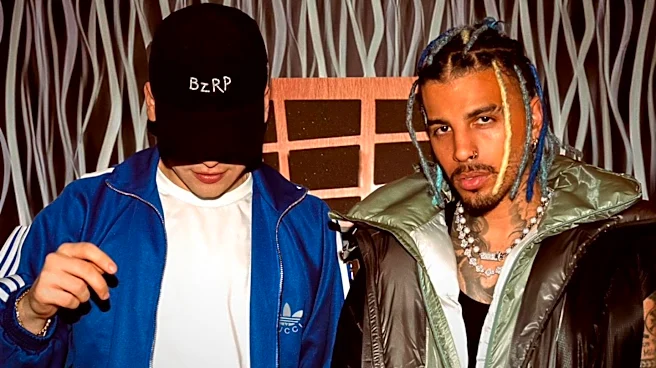
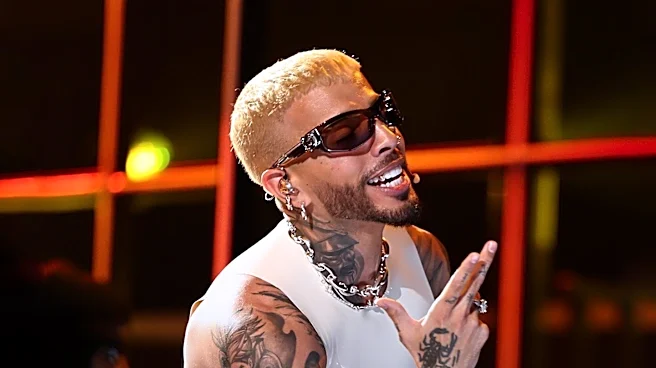
2007, she was singing backup for Reykon. She also collaborated on tracks like 'Tu juguete' and '301'. A significant hurdle in her career occurred in 2012 when Universal Records in Miami reportedly rejected her, claiming a woman would struggle to succeed in the reggaeton genre. Despite this setback, her father, Guillermo Giraldo, supported her by selling the family car and using savings to fund her aspirations. Her stage name, Karol G, originated from her admiration for the rap group G-Unit, with the 'G' not stemming from her last name Giraldo, as commonly assumed. She also changed 'Caro G' to 'Karol G' for a sharper sound. Personally, she dislikes seafood, enjoys riding dirt bikes since age eleven, and has a childhood habit of rolling and blowing away blanket fuzz.
Why It's Important?
Karol G's pre-fame narrative is important as it offers insight into the perseverance and challenges faced by artists, particularly women, in male-dominated music genres like reggaeton. Her story underscores the significant role of family support in an artist's journey, as evidenced by her father's financial sacrifices. For the Latino community in the United States, her rise from humble beginnings and her resilience against industry skepticism resonate deeply, making her success feel more relatable and inspiring. This background also adds depth to her public persona, showcasing the grit and character behind her achievements. The details of her early rejections and personal quirks contribute to a more authentic and humanized image, fostering a stronger connection with her audience and fueling continued interest in her career.
What's Next?
While the provided information does not detail specific upcoming events beyond her concerts in Bogotá, Colombia, in December 2026, the continued interest in Karol G's personal journey suggests that her past experiences will likely remain a significant part of her public narrative. Her Netflix documentary, 'Mañana fue más bonito,' has already explored these aspects, and future projects or interviews may continue to delve into the formative experiences that shaped her. As she continues her career, her backstory of overcoming early rejections and industry biases will likely serve as a powerful message for aspiring artists and a point of connection for her fanbase. Her ongoing success will likely be viewed through the lens of her challenging beginnings, reinforcing her image as a resilient and authentic artist.
Beyond the Headlines
Karol G's journey highlights broader themes within the music industry, particularly the historical biases against women in certain genres. Her initial rejection by Universal Records in 2012, based on her gender, reflects systemic issues that many female artists have faced. Her eventual success, despite such obstacles, serves as a powerful testament to changing industry dynamics and the increasing acceptance of women in diverse musical roles. Furthermore, the emphasis on her personal quirks and family support underscores the importance of authenticity and personal narrative in building an artist's brand in the digital age. This narrative not only humanizes her but also creates a deeper, more emotional connection with her audience, moving beyond just her musical output to her identity as a whole. Her story contributes to a larger cultural conversation about resilience, gender equality, and the pursuit of dreams against odds.