




What's Happening?
Advanced Micro Devices, Inc. (AMD), a leading semiconductor company headquartered in Santa Clara, California, designs high-performance computing, graphics, and adaptive computing technologies. Founded in 1969, AMD operates under a 'fabless' business model,
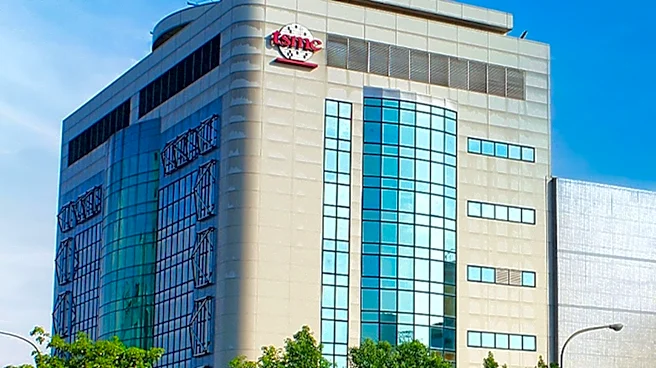
focusing on research, development, and design while outsourcing manufacturing to third-party foundries like Taiwan Semiconductor Manufacturing Company. The company's product portfolio includes Ryzen processors for PCs, EPYC server processors for data centers, Radeon graphics cards for gaming and AI acceleration, and adaptive computing products from its Xilinx acquisition for markets like automotive and aerospace. AMD reports its results across four primary segments: Data Center, Client, Gaming, and Embedded. The company has evolved into a significant competitor to Intel in CPUs and Nvidia in GPUs, particularly with the growing demand for AI-related computing infrastructure.
Why It's Important?
AMD's role as a leading semiconductor company is crucial for the U.S. technology landscape, as its innovations power essential components across various sectors. Its high-performance computing and graphics technologies are fundamental to personal computers, gaming consoles, cloud data centers, and automotive systems, directly impacting U.S. consumers and industries. The company's competition with Intel and Nvidia drives innovation, leading to more advanced and efficient processors and graphics cards that benefit the entire tech ecosystem. Furthermore, AMD's focus on cloud computing and artificial intelligence positions it at the forefront of major technological trends, contributing to the U.S.'s leadership in these critical areas. The 'fabless' model allows AMD to concentrate resources on design and innovation, fostering intellectual property development within the U.S., while its reliance on global foundries highlights the interconnectedness of the global supply chain.
What's Next?
AMD is strategically positioned to capitalize on long-term growth trends in cloud computing, artificial intelligence, and data-intensive workloads. The company's EPYC server chips and Instinct accelerators are expected to drive continued growth in the data center segment. AMD's diversified product portfolio, including Ryzen for PCs and Radeon for gaming, provides exposure to multiple end markets, helping to balance cyclical demand. The integration of Xilinx has expanded AMD's reach into embedded and adaptive computing markets, offering new avenues for growth. However, the company faces intense competition from well-capitalized rivals and is subject to the cyclical nature of the semiconductor industry and potential supply chain disruptions. AMD's future will involve continuous innovation and strategic partnerships to maintain its competitive edge and address evolving market demands.
Beyond the Headlines
AMD's journey from an underdog to a formidable competitor reflects the dynamic and highly competitive nature of the U.S. semiconductor industry. Its success in challenging established giants like Intel and Nvidia demonstrates the power of strategic innovation and leadership, particularly under CEO Dr. Lisa Su. The company's emphasis on architectural innovation and power efficiency has not only secured market share but also pushed the boundaries of computing performance. The 'fabless' model, while efficient, also raises questions about national security and economic resilience, as the U.S. relies heavily on overseas manufacturing for critical components. This reliance underscores ongoing debates about domestic semiconductor manufacturing and supply chain independence. AMD's continued growth and technological advancements will play a significant role in shaping the future of computing and AI infrastructure in the U.S. and globally.