
What's Happening?
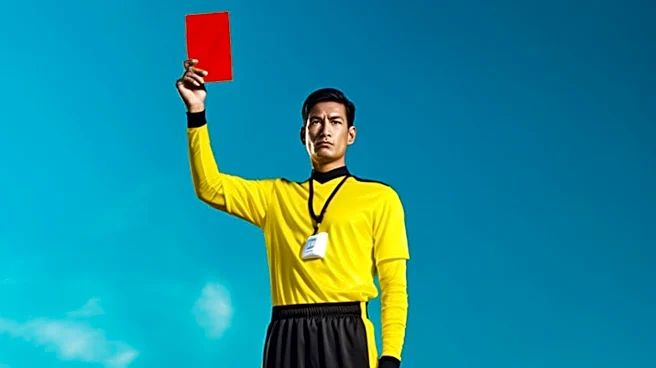
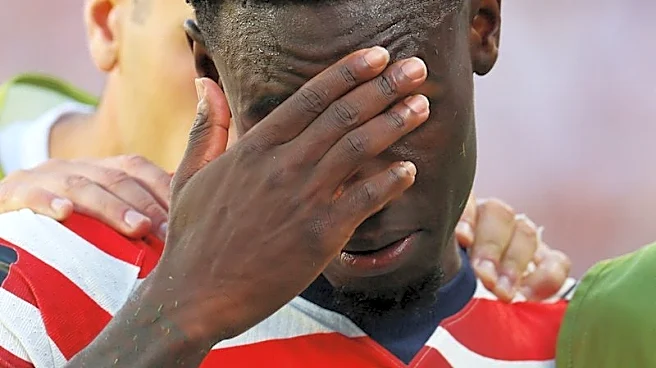
A recent incident involving a red card issued to Folarin Balogun of the US during a World Cup match against Bosnia has reignited debate over the use of slow-motion replays in soccer. The red card was given
after Balogun's foot came down on the ankle of his Bosnian opponent, a decision made after reviewing the incident in slow motion. Adam Crafton, writing for The Athletic, argues that the use of slow-motion replays in such situations distorts the reality of the game, which is played at a much faster pace. Crafton suggests that the Video Assistant Referee (VAR) system, which employs slow-motion replays, should be reconsidered, as it can lead to decisions that many in the soccer community view as unjust. He emphasizes that soccer's rules were designed to be interpreted by on-field officials who are attuned to the game's pace, rather than by analyzing footage in a studio setting.
Why It's Important?
The controversy surrounding the use of slow-motion replays in soccer highlights a significant issue in the sport's officiating. The reliance on VAR and slow-motion technology can lead to decisions that may not accurately reflect the nature of the game as experienced by players and officials on the field. This has broader implications for the integrity of the sport, as it raises questions about the fairness and accuracy of officiating decisions. If slow-motion replays continue to influence critical decisions like red cards, it could affect the outcomes of important matches and the careers of players involved. The debate also touches on the balance between technology and human judgment in sports, a topic that resonates across various athletic disciplines.
What's Next?
The ongoing debate over the use of slow-motion replays in soccer is likely to prompt further discussions among FIFA officials, referees, and the broader soccer community. There may be calls for a review of the VAR system and its implementation, particularly regarding how slow-motion replays are used to assess fouls and other critical incidents. Stakeholders in the sport, including players, coaches, and fans, may advocate for changes to ensure that the technology enhances rather than detracts from the game's fairness. Any potential changes to the VAR system would need to be carefully considered and tested to maintain the integrity of the sport while addressing the concerns raised by incidents like the one involving Balogun.