







What's Happening?
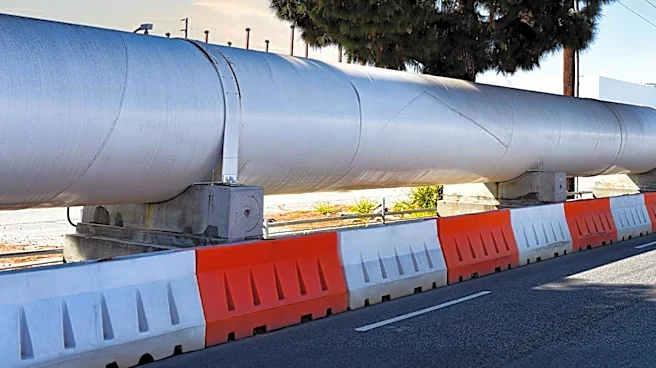
Energy Transfer has announced plans to build a new 215-mile natural gas pipeline, a project valued at $1.6 billion. This pipeline will traverse parts of eastern Louisiana and southern Mississippi. Its primary purpose is to supply natural gas to electric
utilities and liquefied natural gas (LNG) export terminals. The project signifies a significant investment in the region's energy infrastructure, aiming to enhance the distribution capabilities of natural gas to key energy consumers and export facilities. This development was reported by The Black Chronicle, highlighting the company's commitment to expanding its energy network in the southern United States.
Why It's Important?
This $1.6 billion pipeline project is crucial for bolstering the energy infrastructure in the southern U.S., with far-reaching implications for both domestic energy supply and international trade. By providing natural gas to electric utilities, the pipeline will contribute to a more stable and reliable power grid, supporting the energy needs of residents and industries in Louisiana and Mississippi. Furthermore, its connection to LNG export terminals will enhance the U.S.'s capacity to export natural gas, strengthening its position as a global energy supplier. This increased export capability can positively impact the U.S. trade balance and foster economic growth in the energy sector. The project also represents a substantial economic investment in the region, potentially creating jobs and stimulating local economies through construction and ongoing operations.
What's Next?
Following the green light for the project, Energy Transfer will proceed with the necessary planning, permitting, and construction phases. The development of this pipeline will involve significant logistical coordination and engagement with local communities and regulatory bodies in Louisiana and Mississippi. Once operational, the pipeline is expected to integrate into the existing energy network, providing a new conduit for natural gas distribution. The success of this project could pave the way for further investments in natural gas infrastructure, particularly as demand for both domestic consumption and international export continues to evolve. Stakeholders, including energy companies, utilities, and local governments, will monitor the project's progress and its impact on regional energy markets.
Beyond the Headlines
The construction of this natural gas pipeline extends beyond its immediate economic and energy supply benefits, touching upon broader environmental and geopolitical considerations. While natural gas is often seen as a cleaner alternative to other fossil fuels, its extraction and transportation still raise environmental concerns, including methane emissions and potential impacts on local ecosystems. The expansion of LNG export capabilities also plays into global energy politics, influencing international energy security and pricing. This project highlights the ongoing reliance on fossil fuels in the U.S. energy mix, even as the nation explores renewable energy options. It underscores the complex balance between meeting current energy demands, fostering economic growth, and addressing environmental responsibilities in the transition to a more sustainable energy future.