







What's Happening?
Over 100 planners, developers, and business and civic professionals convened at the Jones Center in Springdale, Arkansas, to discuss the challenges and strategies for managing Northwest Arkansas's rapid growth. The region is projected to reach a population
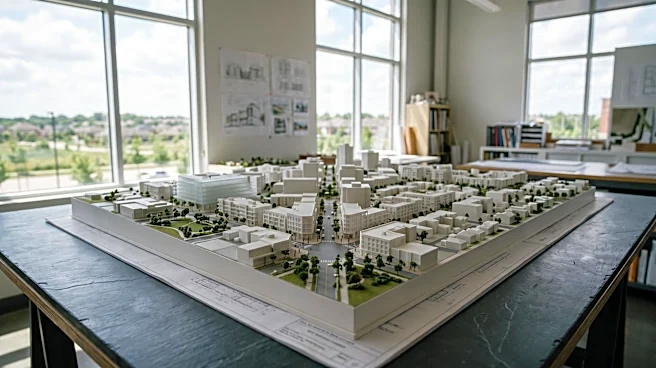
of 1 million by 2050, leading to increased demands for housing, transportation, utilities, and public services. Developer Yume Rudzinski highlighted the complexities and costs associated with the development approval process, noting a three-year wait for a grading permit on a 51-acre site in Rogers. She explained that developers incur significant upfront costs for engineers, architects, and consultants before project approval is secured, and existing local codes often do not align with desired development designs. The forum aimed to translate the Northwest Arkansas Council's regional growth strategy and the Forward 2050 transportation plan into actionable policies and development practices, focusing on creating walkable centers and coordinating development across jurisdictional boundaries.
Why It's Important?
The discussions at the Springdale forum are crucial for the sustainable development of Northwest Arkansas, a region experiencing significant population growth. The challenges identified, such as lengthy approval processes, high upfront costs, and outdated development codes, directly impact housing affordability and the ability to create livable, well-planned communities. If not addressed, these issues could stifle economic growth, exacerbate housing shortages, and lead to uncoordinated urban sprawl. The emphasis on creating walkable centers and corridors reflects a broader national trend towards more sustainable and community-oriented urban planning, which can enhance quality of life and reduce reliance on cars. The coordination among multiple jurisdictions is vital to ensure consistent development standards and efficient resource allocation across the region, preventing fragmented growth and infrastructure inefficiencies.
What's Next?
The Urban Land Institute Northwest Arkansas plans to follow up with participants to gather additional information and develop a technical report. This report will examine barriers to creating centers and corridors in the region and will be presented at the upcoming Place Summit, an annual regional conference. The forum's discussions are expected to inform future policy changes and development practices, with a focus on streamlining approval processes, updating development codes, and fostering greater inter-jurisdictional cooperation. Maryland's Secretary of Housing and Community Development, Jake Day, encouraged Northwest Arkansas cities to prioritize creating desirable places to live, not just attracting employers, suggesting that future efforts will likely focus on improving public spaces and housing options. The ongoing collaboration among various professional and civic groups indicates a sustained effort to address these complex growth challenges.
Beyond the Headlines
The challenges faced by Northwest Arkansas in managing its growth reflect a broader national issue where rapidly expanding regions struggle to balance development with quality of life and environmental sustainability. The tension between developers' need for predictable, efficient approval processes and local governments' desire for thoughtful, community-aligned development is a common hurdle. The discussion about walkability and reduced car dependency, while aspirational, highlights the deep-seated car culture in many U.S. regions, including Arkansas, where public transportation infrastructure is often limited. This necessitates a gradual, incremental approach to urban design changes. Furthermore, the financial burden on developers for upfront costs can disproportionately affect smaller firms or those without substantial capital, potentially limiting innovation and diversity in development projects. The forum's focus on regional identity and what makes a place 'lovable' suggests a growing recognition that successful urban planning extends beyond mere functionality to encompass aesthetic and experiential qualities.