








What's Happening?
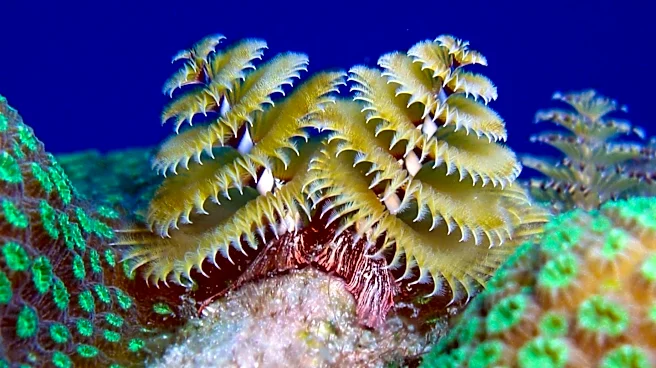
Researchers at TU Wien in Austria have discovered a novel material in the jaws of the marine ragworm Perinereis cultrifera, which they have termed a 'bio-metal'. This material is composed of a combination of proteins and metal ions, such as zinc, giving
it properties that are intermediate between biological materials and metals. The study involved over 3,300 experiments to test the hardness and elasticity of the worm's jaws, revealing that they exhibit a unique combination of metal-like hardness and elasticity not typically found in metals. This discovery could have significant implications for industries seeking hard and lightweight materials, such as automotive and aeronautics.
Why It's Important?
The discovery of this 'bio-metal' material is significant because it offers a new avenue for developing materials that are both hard and lightweight, which are highly sought after in various engineering fields. Industries such as automotive and aeronautics could benefit from materials that provide strength without adding excessive weight, potentially leading to more efficient and sustainable designs. Additionally, understanding the molecular structure and properties of this material could inspire new approaches in material science, particularly in creating synthetic materials that mimic these natural properties. This research highlights the potential of biomimicry in advancing engineering and material sciences.
What's Next?
The research team, including geneticists and biologists from the University of Vienna, is exploring the genetic basis of this 'bio-metal' material. They are investigating how genetic modifications might alter the properties of the worm's jaws, with the long-term goal of genetically programming materials to grow in biological systems. This could lead to breakthroughs in creating materials with tailored properties for specific applications. The ongoing research aims to uncover the mechanisms by which evolution has produced such a material, potentially leading to innovative applications in various industries.
Beyond the Headlines
The discovery of this 'bio-metal' material also raises interesting questions about the evolutionary processes that led to its development. Understanding how such materials evolved could provide insights into the natural world and inspire new approaches in synthetic biology and materials science. The potential to genetically engineer materials with specific properties could revolutionize how materials are designed and used, leading to more sustainable and efficient technologies. This research underscores the importance of interdisciplinary collaboration in uncovering and harnessing the potential of natural materials.