







What's Happening?
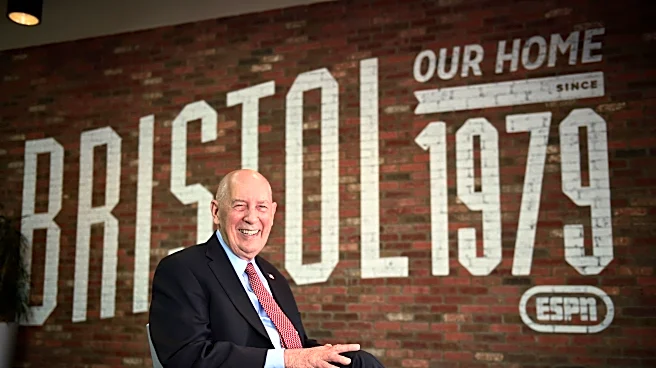
Bill Rasmussen, the visionary founder of ESPN, has passed away at the age of 93 after a prolonged illness. Rasmussen launched ESPN in 1979, revolutionizing television by introducing a 24/7 sports channel delivered via satellite. This initiative predated
CNN, the first 24/7 news channel, by nine months. Initially conceived as a local sports channel for Connecticut, ESPN quickly expanded its reach, connecting with 1.4 million U.S. homes at its inception and growing to 111 million by 2010. Rasmussen's early efforts were largely self-funded through personal credit cards before securing crucial investment from Getty Oil. Although he left ESPN in 1980, his foundational concept laid the groundwork for the modern sports media landscape. Bob Ley, ESPN's first full-time SportsCenter anchor, highlighted Rasmussen's enduring impact, noting that the Los Angeles Lakers' current valuation, for example, is a testament to his pioneering work.
Why It's Important?
Bill Rasmussen's establishment of ESPN fundamentally altered the U.S. media and sports industries. By pioneering satellite television delivery for a dedicated sports channel, he created a new model for content distribution and consumption. This innovation not only made sports accessible around the clock but also paved the way for the proliferation of specialized cable channels, influencing how news, entertainment, and other niche content are delivered. His foresight in leveraging satellite technology transformed sports from a regional or occasional broadcast event into a continuous national spectacle, significantly increasing its commercial value and cultural prominence. The success of ESPN demonstrated the viability of niche programming and the power of direct-to-consumer content delivery, impacting advertising strategies, media ownership, and the overall economic structure of television broadcasting. His legacy is evident in the continued evolution of sports media, including the current trend towards streaming services, which can be seen as a direct descendant of his original vision for accessible, dedicated content.
What's Next?
While Rasmussen's direct involvement with ESPN ended decades ago, his foundational impact continues to shape the future of sports broadcasting. The current landscape, characterized by the shift from traditional cable to streaming services, reflects an ongoing evolution of the model he initiated. ESPN itself is adapting to these changes, with a streaming app now available, indicating a move towards direct digital consumption. This transition suggests that the industry will continue to explore new technologies and platforms to deliver sports content, aiming for greater accessibility and personalized viewing experiences. The emphasis will likely remain on continuous coverage and diverse programming, mirroring the 24/7 model Rasmussen established. Future developments will focus on integrating interactive features, virtual reality, and other emerging technologies to enhance fan engagement, all building upon the precedent set by ESPN's original satellite-driven approach.
Beyond the Headlines
Rasmussen's story extends beyond mere business innovation; it embodies the spirit of American entrepreneurship and the transformative power of a singular vision. His ability to secure funding and build a media empire from humble beginnings, even using personal credit cards, highlights a 'bootstrap' narrative that resonates deeply within American culture. The dedication of the American flag at ESPN's campus to Rasmussen underscores the patriotic and aspirational dimensions often associated with such pioneering efforts. Furthermore, his creation of a dedicated sports network fostered a collective national identity around sports, creating shared experiences and conversations that transcended geographical boundaries. This cultural impact, often overlooked in purely economic analyses, demonstrates how media can shape societal bonds and traditions. The evolution of ESPN from a niche channel to a global sports powerhouse also reflects broader shifts in media consumption and the increasing specialization of content, a trend that continues to influence how information and entertainment are consumed in the digital age.