






What's Happening?
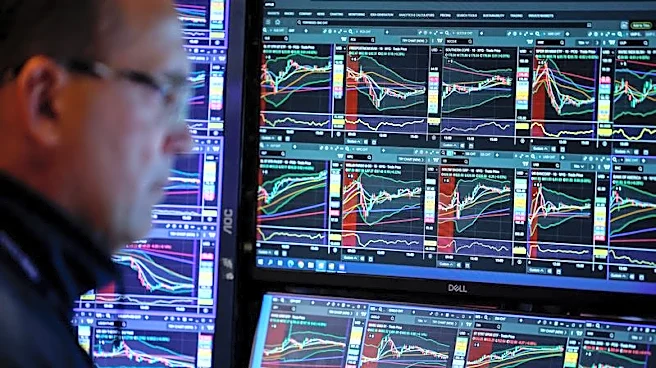
AI chip stocks, including Nvidia and AMD, experienced a rebound on Friday after a significant global rout earlier in the week. Nvidia rose 2.78% to $186.64, recovering from a 9.3% plunge on Thursday, while AMD jumped 11.04% to $449.04 after a 17.3% collapse.
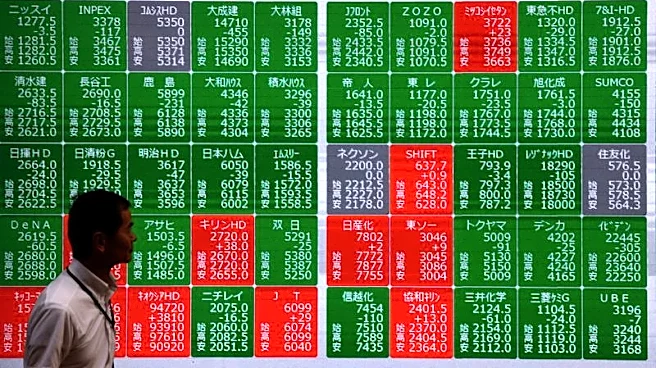
This volatility extended beyond U.S. markets, with South Korea’s KOSPI losing 6% and Taiwan’s benchmark dropping over 8% during the week, its worst in months. TSMC, a major chipmaker, hit its daily limit-down threshold. The US Tech 100 cash-market proxy also recovered, gaining 1.85% to 27,007.3, but remains down more than 5.5% for the week. The turmoil is attributed to concerns over data center restrictions following U.S. midterm elections and the high cost of AI infrastructure, leading investors to question whether the market is undergoing a correction or if an AI bubble is beginning to burst.
Why It's Important?
The recent volatility in AI chip stocks highlights growing investor apprehension regarding the sustainability of the AI boom. Data centers are a primary growth driver for chip companies, and new restrictions on development, as indicated by local ballot contests, could significantly impact future orders and construction. This uncertainty, coupled with more expensive borrowing costs, makes it harder for AI companies to sustain aggressive spending on infrastructure before clear returns are established. The situation draws parallels to the dot-com crash, where overvalued companies failed despite the underlying technology's long-term potential. While major tech companies like Microsoft, Alphabet, Amazon, and Meta are more financially robust than many dot-com startups, the strain is evident in riskier areas of AI financing, such as the rising cost of insuring against default for AI-cloud providers like CoreWeave. This market behavior could signal a broader re-evaluation of AI sector valuations and investment strategies.
What's Next?
The coming week will provide further clarity on the state of the AI market. Investors will closely watch earnings reports from companies like CoreWeave, Applied Materials, and Cisco for indications of continued customer orders for capacity and equipment. Additionally, inflation data will influence expectations for future borrowing costs, which are critical for capital-intensive AI infrastructure projects. Stable orders and manageable debt levels would support the argument that the market is undergoing a correction. Conversely, repeated project cancellations, failed refinancing efforts, and shrinking sales would suggest that the financial foundations of the AI boom are cracking. The focus will be on whether the industry can balance its long-term promise with near-term financial realities.
Beyond the Headlines
The current market dynamics in the AI sector raise fundamental questions about the nature of technological bubbles and investor behavior. The distinction between a market correction and a bubble bursting is crucial: a correction implies a temporary dip before continued growth, while a bubble bursting suggests a more severe and prolonged downturn due to unrealistic expectations. The rapid expansion of AI, while transformative, has led to significant capital expenditure, often without immediate, clear returns. This scenario could lead to a shakeout where many individual AI companies fail, even as the technology itself continues to advance and transform industries. The financial warning signs, such as increased default insurance costs, indicate that while the broader bond markets remain stable, specific, high-risk segments of AI financing are experiencing considerable stress. This could lead to a more cautious investment environment and a greater emphasis on profitability and sustainable business models within the AI ecosystem.