




What's Happening?
U.S. retail sales saw a modest increase of 0.2% in October, following a more substantial 0.8% surge in September, according to the Commerce Department's Census Bureau. This growth, which aligns with economists' expectations, indicates that consumers are
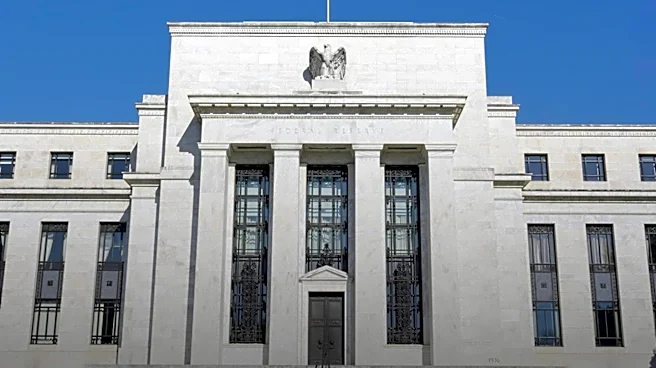
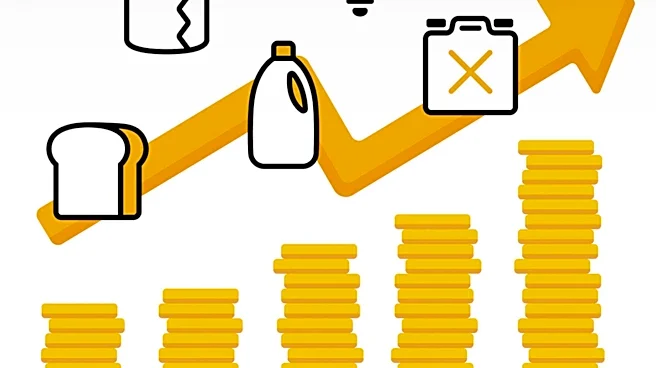
moderating their spending, particularly on big-ticket items like motor vehicles and furniture. Despite this slowdown in overall retail sales, core retail sales—which exclude automobiles, gasoline, building materials, and food services—rose by 0.6%, surpassing economists' forecasts. Concurrently, import prices increased by 1.1% for the second consecutive month, exceeding predictions. This rise in import prices was largely driven by a 3.6% increase in fuel costs, with non-fuel and non-food import prices also climbing by 0.9%. The combination of sustained consumer spending in core areas and rising import costs is reinforcing the Federal Reserve's inclination to continue raising interest rates, with a December hike widely anticipated.
Why It's Important?
The latest retail sales and import price data present a complex picture for the U.S. economy and monetary policy. The continued, albeit slower, growth in retail sales suggests underlying consumer resilience, particularly among higher-income households who have benefited from stock market gains. However, the increasing reliance on credit cards by other households and a near four-year low in the saving rate indicate potential financial strain for a segment of the population. The significant rise in import prices, especially for capital goods and non-electrical machinery, signals persistent inflationary pressures that could impact businesses and consumers. This scenario complicates the Federal Reserve's efforts to manage inflation without stifling economic growth. The data reinforces the expectation of further interest rate hikes, which could increase borrowing costs for businesses and consumers, potentially slowing down economic activity in the coming months.
What's Next?
Economists widely anticipate that the Federal Reserve will proceed with another interest rate hike in December, given the persistent inflationary signals from import prices and the underlying strength in core retail sales. The Fed's benchmark overnight interest rate, currently in the 3.75%-4.00% range, is expected to climb further. Future economic reports, particularly those on employment, consumer prices, wages, and producer costs, will be crucial in determining the Fed's subsequent policy decisions beyond December. Financial markets will closely monitor these indicators for signs of whether October's data represents a temporary fluctuation or a more significant shift in economic trends. Businesses and consumers should prepare for a continued environment of higher interest rates and potentially elevated prices, which could influence spending and investment decisions in the near term.
Beyond the Headlines
The current economic landscape highlights a growing divergence in consumer financial health. While higher-income households continue to drive spending, lower-income households are increasingly relying on credit and facing budget constraints due to inflation. This disparity could exacerbate social and economic inequalities, potentially leading to calls for policy interventions aimed at supporting vulnerable populations. The sustained rise in import prices, partly attributed to global supply chain dynamics and geopolitical events, also underscores the interconnectedness of the U.S. economy with international markets. This could prompt businesses to re-evaluate their supply chain strategies, potentially leading to increased domestic production or diversification of sourcing to mitigate future cost shocks. The ongoing inflation and interest rate hikes may also influence consumer behavior in the long term, fostering a more cautious approach to spending and a greater emphasis on saving, particularly if economic uncertainty persists.