







What's Happening?
AerosoarX Chairman Max Lo stated that Taiwan's drone industry requires supply chains capable of sustaining production during prolonged conflicts, rather than solely relying on stockpiles. Speaking at his company's first public event, Lo drew lessons from
the Russia-Ukraine war, warning that even substantial inventories can be rapidly depleted in a war of attrition. He argued that continuous production and replenishment across the entire supply chain are crucial for enduring such conflicts. Lo proposed establishing manufacturing operations in various countries with shared assembly specifications and interchangeable components, allowing for production expansion if one location is disrupted. He also emphasized that 'defense self-reliance' does not mean doing everything domestically, advocating for cooperation based on common standards, joint procurement, distributed production, mutual maintenance, and shared reserve inventories, to be established before a conflict.
Why It's Important?
This perspective highlights a critical shift in defense strategy, moving beyond static stockpiles to dynamic, resilient supply chains. For Taiwan, facing potential conflict, this approach is vital for ensuring long-term defense capabilities and reducing vulnerability to blockades or disruptions. For the U.S. and its allies, understanding and potentially integrating into such distributed supply chains could enhance collective security and interoperability. It underscores the economic and strategic importance of a diversified and robust industrial base for defense. The emphasis on international cooperation and shared standards could also foster greater trust and collaboration among democratic partners, creating a more resilient global defense ecosystem that is less susceptible to geopolitical pressures.
What's Next?
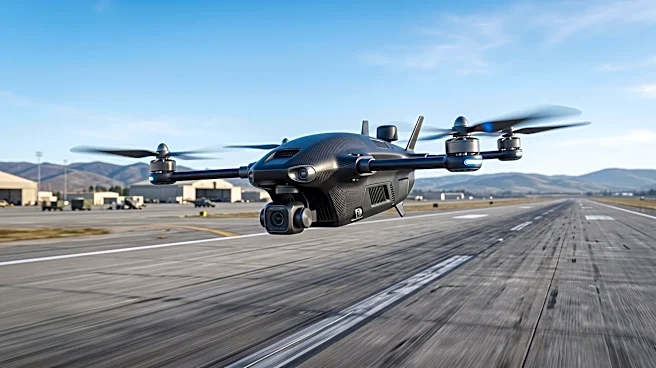
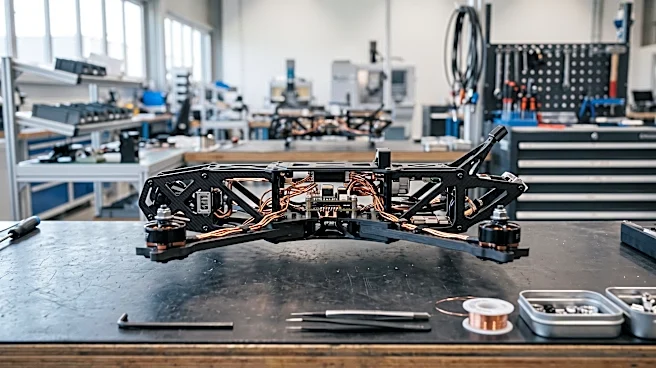
AerosoarX, dedicated to developing AI-enabled unmanned vehicles, envisions Taiwan as a hub for system integration, modular design, and component kits for overseas assembly, with Vietnam and Malaysia identified as potential supply-chain and assembly hubs. This suggests a future focus on building a commercially sustainable network that extends beyond Taiwan's domestic market. Lo also acknowledged the economic challenges of replacing Chinese suppliers and advocated for a gradual reduction in dependence on critical supply-chain links. The company plans to focus on smaller operations serving international customers to maintain active production and flexibility for increased output during emergencies. This strategy will likely involve continued engagement with international partners to establish the proposed cooperative frameworks.
Beyond the Headlines
The concept of 'wartime endurance' through distributed and resilient supply chains represents a significant evolution in defense planning, moving away from traditional models of national self-sufficiency. It acknowledges the interconnectedness of the global economy and the need for international collaboration to ensure security. This approach has broader implications for industrial policy, encouraging nations to invest in critical technologies and foster international partnerships that can withstand geopolitical shocks. It also highlights the ethical and strategic considerations of supply chain diversification, particularly in reducing reliance on potential adversaries. The focus on AI-enabled unmanned vehicles further points to the future of warfare, where technological superiority and adaptable production capabilities will be paramount.