





What's Happening?
Crackle beads are a type of glass bead characterized by a distinctive cracked pattern on their interior, while maintaining a smooth, polished exterior. This unique effect is achieved during the manufacturing process by rapidly cooling molten glass. The
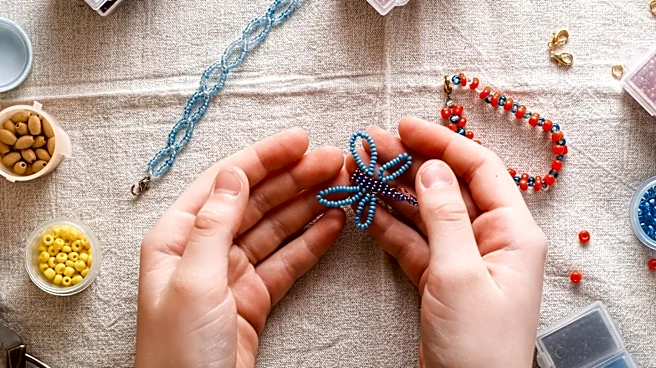
sudden temperature change causes internal fractures, which enhance the bead's shine and add dimension. These beads are popular for various jewelry-making projects due to their eye-catching appearance. For instance, 8mm round red and black crackle beads are sold in 30-inch strings, with each string containing approximately 95 to 100 beads. They are suitable for creating necklaces, bracelets, anklets, earrings, and layered jewelry sets. The red and black combination is noted for creating a bold and dramatic look, often paired with antique gold or oxidized silver elements for festive or statement designs. The internal crackle texture reflects light, adding depth and sparkle.
Why It's Important?
The popularity of crackle beads highlights a significant trend in the crafting and jewelry design industry, where unique textures and visual effects drive consumer interest. The manufacturing technique, involving rapid cooling to create internal cracks, demonstrates an innovative approach to material manipulation for aesthetic purposes. This method allows for mass production of beads with intricate, individualized patterns, making them accessible for both amateur and professional jewelry makers. The demand for such distinct components influences supply chains for glass and bead manufacturers, potentially fostering specialized production techniques and material sourcing. Furthermore, the versatility of crackle beads in various jewelry types, from casual to statement pieces, indicates their broad market appeal and contribution to diverse fashion trends, impacting retail sales and design aesthetics within the accessories market.
What's Next?
The continued demand for unique and visually appealing components like crackle beads suggests that manufacturers may explore further innovations in glass treatment and bead design. This could lead to the development of new crackle patterns, color combinations, and sizes to cater to evolving consumer preferences and design trends in the jewelry market. Retailers and craft suppliers are likely to continue stocking a wide variety of these beads, potentially expanding their offerings to include more specialized or limited-edition collections. Additionally, as DIY jewelry making remains popular, there may be an increase in online tutorials and workshops focusing on incorporating crackle beads into various designs, further boosting their market presence and encouraging creative applications among hobbyists and small businesses.
Beyond the Headlines
The appeal of crackle beads extends beyond their immediate aesthetic value, touching upon the broader human fascination with imperfection and natural-looking textures. The controlled cracking process mimics organic geological formations or aged materials, offering a sense of history and uniqueness in a mass-produced item. This blend of natural aesthetics with industrial manufacturing reflects a consumer desire for authenticity and individuality, even in manufactured goods. Culturally, the use of such beads in jewelry can symbolize resilience or the beauty found in brokenness, adding a deeper layer of meaning to personal adornment. The widespread adoption of these beads also underscores the influence of accessible crafting materials on personal expression and the democratization of design, allowing individuals to create personalized items that resonate with their own artistic sensibilities.