




What's Happening?
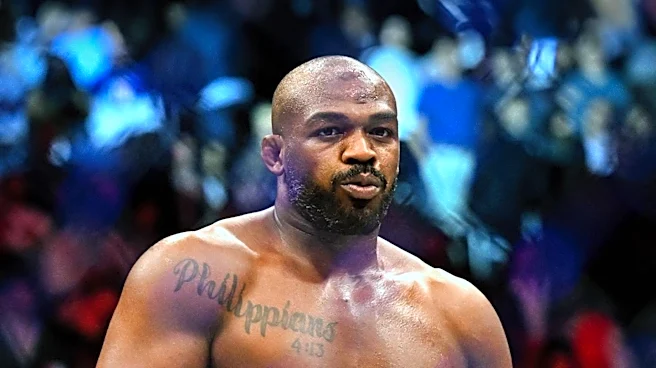
Daniel Cormier, a prominent figure in the UFC, has disclosed that Jon Jones, his long-time rival, turned down a lucrative seven-figure offer to participate in a wrestling match. The offer was made by a wrestling promotion interested in capitalizing on the historic
rivalry between Cormier and Jones, which has been a significant part of UFC history. Despite the potential financial gain, Jones reportedly refused to engage in the match, citing a preference for submission-only grappling rather than a point-based wrestling match. Cormier expressed his disappointment during a Q&A session on his YouTube channel, stating that Jones is unwilling to compete in any format where he might face defeat. This revelation comes after both fighters reignited their rivalry earlier this year while coaching on a Russian MMA reality TV show.
Why It's Important?
The refusal of Jon Jones to participate in the proposed wrestling match highlights the ongoing tension and competitive dynamics between him and Daniel Cormier. This decision not only affects potential financial opportunities for both fighters but also underscores the strategic considerations athletes make regarding their public image and legacy. For the UFC and the broader combat sports community, such high-profile matchups can significantly boost viewership and revenue. Jones's decision may influence future negotiations and the types of events that promotions can successfully organize. Additionally, it reflects the personal stakes involved for athletes who have built their careers on rivalries and the importance of maintaining a winning record.
What's Next?
While the wrestling match between Cormier and Jones is unlikely to happen, the ongoing interest in their rivalry suggests that other promotional opportunities may arise. Both fighters may continue to explore alternative formats or events that could reignite public interest and offer financial incentives. For the UFC and other combat sports organizations, this situation highlights the need to innovate and find new ways to engage audiences, possibly through reality TV or other media ventures. Fans and stakeholders will be watching closely to see if either fighter changes their stance or if new developments emerge that could bring them back into the ring or onto the mat.