



What's Happening?
Converting existing Bitcoin mining facilities into modern Artificial Intelligence (AI) data centers is proving to be a significantly expensive undertaking, despite the shared need for substantial electricity. Core Scientific, a prominent Bitcoin miner,
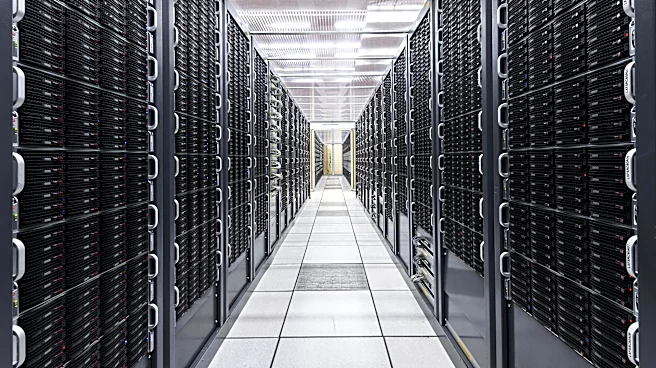
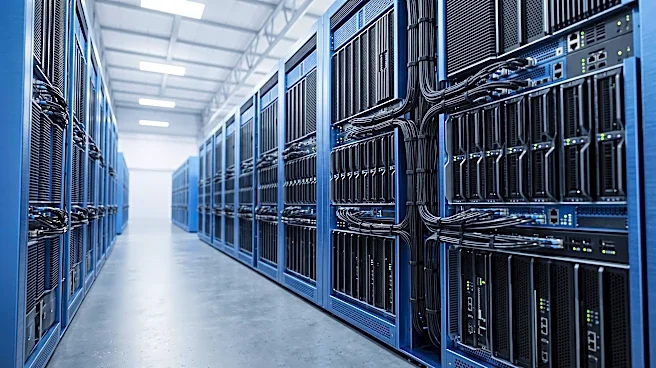
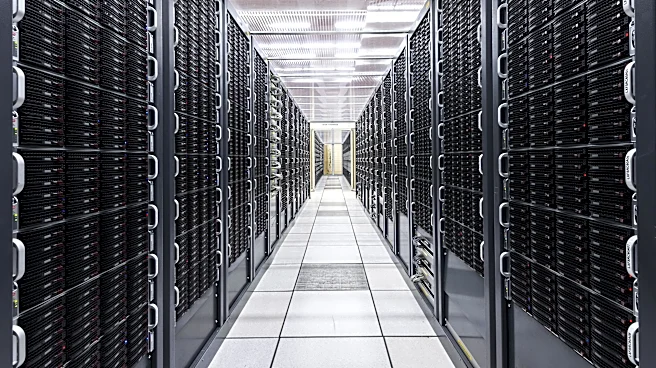
provides a revealing example, with six data center projects leased to CoreWeave carrying approximately $5.5 billion in anticipated construction expenditures for 590 megawatts of contracted IT capacity. This translates to roughly $9.3 million per megawatt, covering a broad development portfolio. The high costs stem from the demanding infrastructure requirements of modern GPU clusters, which necessitate advanced cooling systems, high-bandwidth fiber connections, and sophisticated electrical distribution, far beyond the simpler needs of traditional Bitcoin mining operations. Consequently, Bitcoin miners transitioning to AI are increasingly valued for their land and electrical infrastructure rather than their existing mining equipment.
Why It's Important?
The substantial investment required for converting Bitcoin mines into AI data centers highlights the critical infrastructure gap in the rapidly expanding AI industry. While Bitcoin miners possess a key asset—access to enormous amounts of electricity—the specialized demands of AI computing mean that simply swapping out hardware is insufficient. This financial barrier underscores why AI infrastructure financing increasingly relies on project debt, long-term leases, and specialized infrastructure investors. For the U.S. economy, this trend signifies a massive capital reallocation and investment into high-tech infrastructure, potentially creating new economic hubs and job opportunities in regions with abundant power. However, it also means that only well-capitalized or strategically partnered entities can effectively make this transition, potentially consolidating power and resources within a few major players.
What's Next?
As the demand for AI computing continues to surge, the conversion of Bitcoin mining facilities will likely accelerate, driven by the promise of more predictable and higher customer revenues compared to the volatile profitability of Bitcoin mining. Companies like Core Scientific, TeraWulf, and Hut 8 are actively pursuing long-term AI infrastructure contracts, indicating a clear strategic direction for the sector. Future developments will likely focus on innovative financing models and technological advancements to reduce conversion costs and improve efficiency. The industry will also need to address the environmental impact of these large-scale AI data centers, potentially leading to increased investment in renewable energy sources and more efficient cooling technologies. The success of these conversions will be crucial for meeting the growing computational needs of the AI revolution.
Beyond the Headlines
The pivot from Bitcoin mining to AI data centers represents a fascinating evolution in the use of digital infrastructure, reflecting changing technological priorities and economic incentives. This shift also brings to light the inherent value of physical assets like land and power access in the digital age, demonstrating that even in a highly virtualized world, tangible resources remain foundational. The ethical implications of this transition include questions about the responsible use of energy, the concentration of computing power, and the potential for these facilities to exacerbate existing environmental concerns if not managed sustainably. Furthermore, the political landscape surrounding data center development, including zoning and environmental permits, will become increasingly important, influencing where and how these critical infrastructures are built and operated.