





What's Happening?
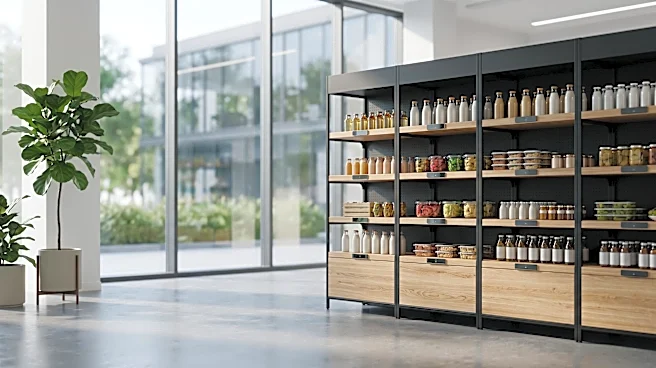
Ahold Delhaize USA's Retail Business Services (RBS) arm has launched a checkout-free grocery store, named 'Lunchbox,' within the Giant Direct e-commerce fulfillment center (EFC) in Philadelphia. This 450-square-foot store allows the EFC's 125 employees
to purchase fresh and shelf-stable food and beverages by simply scanning in to enter, selecting items, and walking out. The system uses autonomous store technology from Intel solutions partner CloudPick, which employs artificial intelligence (AI), IoT devices, and sensors to detect products removed from shelves and link them to the shopper. Customers register in advance to set up an account for transactions and payment via credit/debit card or digital wallet, receiving a receipt on their smartphone upon exiting. The store operates 24/7, providing a convenient option for employees who would otherwise need to travel off-site for food purchases.
Why It's Important?
This initiative by Ahold Delhaize USA signifies a growing trend in retail towards frictionless shopping experiences, leveraging advanced AI and IoT technologies. For the retail industry, it demonstrates a practical application of cashierless technology beyond experimental phases, particularly in controlled environments like employee-only stores. The success of such models could pave the way for broader adoption in public retail spaces, potentially transforming customer convenience and operational efficiency. It also highlights the increasing integration of technology in supply chain and logistics facilities, aiming to enhance employee welfare and productivity. The use of AI and sensor technology for inventory management and transaction processing could lead to reduced labor costs and improved data collection on consumer preferences, impacting how retail spaces are designed and managed in the future.
What's Next?
Following successful pilots at other locations, the Philadelphia Lunchbox store's performance will likely inform future deployments of this technology. RBS has indicated that the 'walk-in, walk-out' solution is available for implementation in various spaces, including airports, train stations, office buildings, college campuses, convention centers, and gas stations. This suggests a strategic plan to expand the reach of cashierless retail beyond traditional grocery settings. The assortment of products in the Lunchbox store will be adjusted based on demand, indicating an adaptive approach to inventory management. The continued development and refinement of this technology, particularly in ensuring accuracy and security, will be crucial for its broader commercial viability and acceptance among consumers and businesses.
Beyond the Headlines
The deployment of cashierless stores like Lunchbox raises deeper implications regarding the future of employment in the retail sector and consumer privacy. While offering unparalleled convenience, the widespread adoption of such technology could reduce the need for human cashiers and store staff, potentially leading to job displacement. Furthermore, the reliance on AI, IoT devices, and body skeletal tracking to monitor shopper movements and purchases brings forth questions about data collection, surveillance, and the ethical use of personal information in commercial settings. Ensuring transparency in data handling and robust cybersecurity measures will be paramount to building consumer trust. This technological shift also challenges traditional retail models, pushing businesses to innovate and adapt to a more automated, data-driven shopping environment, potentially redefining the customer-store relationship.