








What's Happening?
The Fund for Energy Efficiency Technologies (FEET) has announced its first deployment of financing for two wind-assisted propulsion systems (WAPS) projects. This initiative, a collaboration between the Global Centre for Maritime Decarbonization (GCMD),
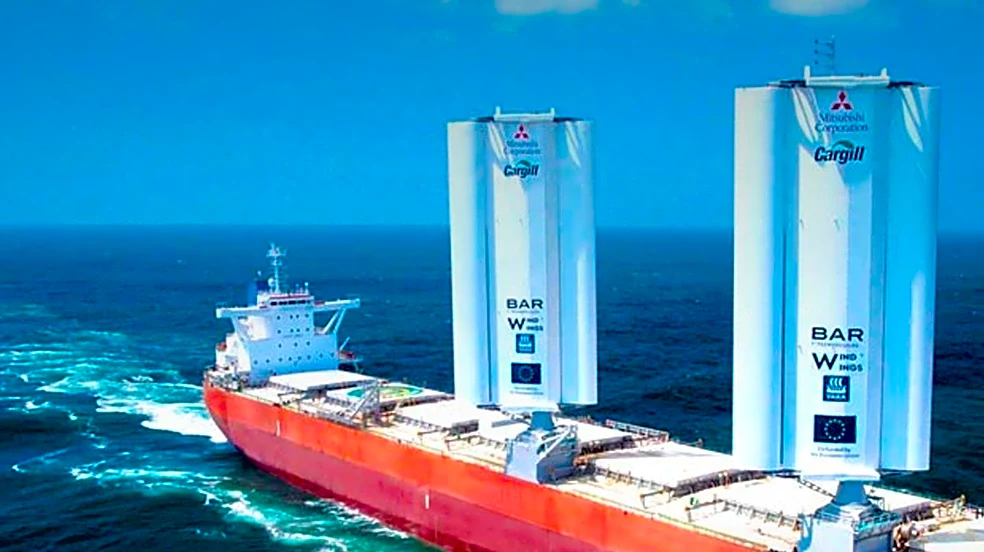
AIM Horizon Investments, and Eastern Pacific Shipping (EPS), will fund the installation of three 22-meter suction sails on each of two vessels, the MV Pacific Sentinel and MV Pacific Sunstone. These vessels are the first in the EPS fleet to utilize WAPS. FEET is designed as the world's first fund to link verified fuel and regulatory savings from energy-efficient technologies (EETs) installed on vessels to a pay-as-you-save mechanism, offering up to 100% upfront financing through a blended finance structure. The fund is managed by AIM Horizon Investments, with GCMD serving as its decarbonization advisor, and is supported by the Development Bank of Japan, DBS Bank, and ING.
Why It's Important?
This financing model is significant for the maritime industry's decarbonization efforts. By linking payments to verified fuel savings, FEET aims to reduce the financial risk for shipowners investing in new, unproven energy-efficient technologies. The successful deployment and verification of savings from these wind-assisted propulsion systems could pave the way for wider adoption of similar technologies across global shipping fleets. This approach addresses a critical barrier to the uptake of EETs: the need for clear, quantifiable returns on investment. Increased adoption of such technologies can lead to substantial reductions in fuel consumption and greenhouse gas emissions, contributing to environmental sustainability and potentially lowering operational costs for shipping companies, thereby impacting global supply chains and trade economics.
What's Next?
FEET plans to apply its methodology, which has been reviewed by an independent third party, to determine fuel savings for future WAPS projects it finances. The project data will undergo auditing, and the calculated fuel savings will be independently verified to determine payments from shipowners. This rigorous verification process is crucial for building investor confidence and encouraging broader investment in energy-efficient technologies within the maritime sector. The success of these initial projects will serve as a case study for the effectiveness of the pay-as-you-save financing model, potentially leading to its expansion and the financing of more diverse EETs across the shipping industry. Stakeholders will be closely watching the performance of the MV Pacific Sentinel and MV Pacific Sunstone to assess the real-world impact of WAPS.
Beyond the Headlines
The innovative financing structure introduced by FEET could set a precedent for how capital is deployed for environmental technologies in other hard-to-abate sectors. By directly linking financial returns to measurable environmental benefits (fuel savings and reduced emissions), the fund creates a powerful incentive for technological adoption. This model could inspire similar blended finance initiatives that bridge the gap between technological innovation and commercial viability, especially in industries facing significant decarbonization challenges. Furthermore, the emphasis on independent verification of savings highlights a growing demand for transparency and accountability in green investments, fostering trust among investors and promoting genuine environmental impact rather than 'greenwashing.'