






What's Happening?
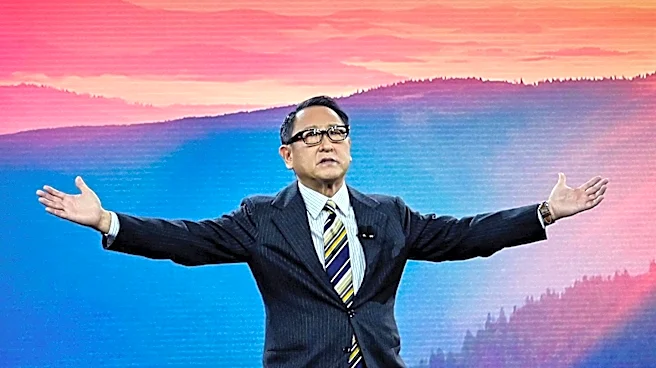
Effective January 1, 2027, Akio Toyoda will assume leadership of the Toyota Philosophy and Education Group. Concurrently, he will maintain his position as president of the board of Toyota Motor Corporation. This development was highlighted in a recent
interview where Kenta Kon, Toyoda's former secretary and now CEO, questioned him about lessons learned from navigating the group's crises. The discussion, which also included Yoichi Miyazaki, was described as a blend of humor, seriousness, and a focus on the general interest. The article from Autoactu.com suggests that Kon and Miyazaki are entrusting Toyoda with this new mission, indicating a strategic shift in his responsibilities within the company.
Why It's Important?
This strategic move by Toyota Motor Corporation to have Akio Toyoda lead the Toyota Philosophy and Education Group, while retaining his board presidency, signals a significant emphasis on the company's core values and long-term vision. By placing a figure of Toyoda's stature in charge of philosophy and education, Toyota is likely aiming to reinforce its corporate culture, ensure the transmission of its foundational principles to future generations of employees, and maintain a consistent strategic direction. This could have implications for Toyota's global operations, including its presence and competitive strategy in the U.S. market. A strong, unified corporate philosophy can enhance brand loyalty, drive innovation, and improve operational efficiency, ultimately benefiting the company's market position and stakeholder value. For the U.S. automotive industry, this could mean a more focused and values-driven competitor, potentially influencing product development, customer relations, and corporate social responsibility initiatives.
What's Next?
Starting January 1, 2027, Akio Toyoda will officially take on his new role leading the Toyota Philosophy and Education Group. This transition suggests a period of internal restructuring and a renewed focus on the company's foundational principles. It is anticipated that Toyoda will work to embed Toyota's core philosophies more deeply within the organization, potentially influencing training programs, leadership development, and strategic decision-making. This could lead to new initiatives aimed at strengthening corporate culture and ensuring the long-term sustainability of Toyota's values. Stakeholders, including investors and employees, will likely observe how this dual role impacts Toyota's operational strategies and its ability to adapt to future challenges in the global automotive landscape. The company's communications in the coming years may shed more light on the specific objectives and outcomes expected from this new leadership structure.
Beyond the Headlines
Akio Toyoda's dual role as head of the Toyota Philosophy and Education Group and president of the board suggests a deeper strategic intent beyond mere organizational restructuring. This move could be interpreted as an effort to institutionalize Toyoda's leadership philosophy and the lessons learned from past crises, ensuring their longevity within the company. It highlights a growing trend in major corporations to formalize and embed their core values and ethical frameworks, recognizing that a strong philosophical foundation can be a competitive advantage. This approach could foster a more resilient and adaptable corporate culture, particularly in an era of rapid technological change and evolving market demands. For the broader business world, it underscores the importance of leadership succession planning that not only transfers operational control but also preserves and propagates the intellectual and ethical heritage of a company. This could set a precedent for other global enterprises, including those operating in the U.S., to consider similar structures for safeguarding their long-term vision and values.