




What's Happening?
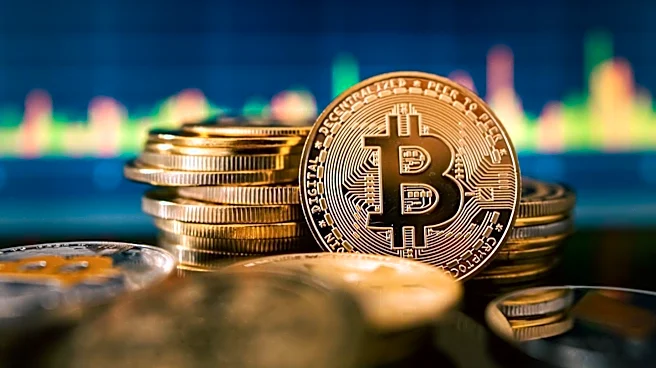
As of October 30, 2026, at 8:15 a.m. Eastern Time, the price of a single Bitcoin (BTC) stands at $77,380.93. This represents a decrease of $2,655.67 from its trading price the previous morning and is approximately $30,941 lower than its value one year
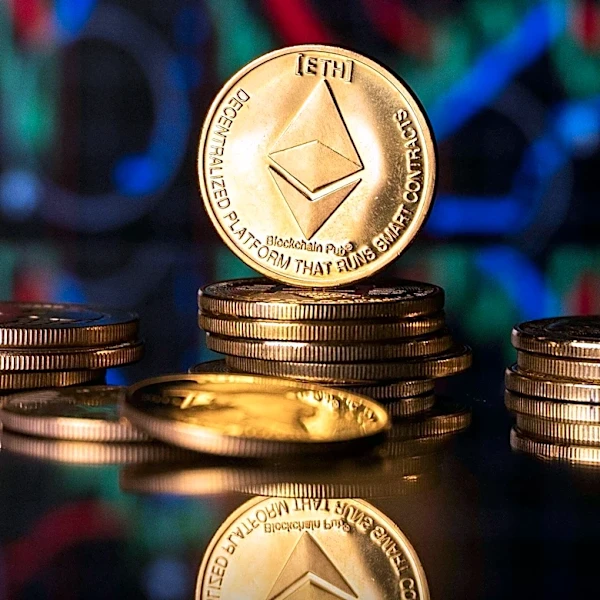
ago. Bitcoin, recognized as the pioneering cryptocurrency, maintains the largest market capitalization at roughly $1.33 trillion, significantly surpassing Ethereum, which holds the second position with about $233 billion. Bitcoin functions as a decentralized digital currency, operating on a peer-to-peer network without central authority. Its price is influenced by investor speculation, adoption by major companies, the overall economy, and regulatory developments. Other major cryptocurrencies also show varied prices: Ethereum is at $2,232.62, Tether (USDT) at $0.99, and XRP at $1.24.
Why It's Important?
The current price movement of Bitcoin and other cryptocurrencies is significant for U.S. investors and the broader financial landscape. Bitcoin's volatility, as evidenced by its recent drop and year-over-year decline, highlights the speculative nature of digital assets. Many investors view Bitcoin as a potential hedge against inflation or a way to diversify beyond traditional investments, yet its price swings underscore the risks involved. The performance of Bitcoin often influences the wider cryptocurrency market, affecting investor sentiment and capital allocation. For U.S. industries, particularly those in technology and finance, the stability and growth of cryptocurrencies can impact innovation, investment in blockchain technology, and the development of new financial products. Regulatory developments in the U.S. continue to play a crucial role, as new rules can either instill confidence or create uncertainty, directly affecting Bitcoin's price and adoption rates among mainstream financial institutions and individual investors.
What's Next?
The future trajectory of Bitcoin's price will likely be influenced by several factors. Continued adoption by major corporations and payment processors could provide a boost, while ongoing regulatory clarity or new enforcement actions in the U.S. could significantly impact its value. Investor sentiment, driven by global economic conditions and geopolitical events, will also play a critical role. As the cryptocurrency market matures, there may be a push for more stable price movements, though volatility is expected to remain a characteristic. Investors will continue to monitor Bitcoin's performance relative to other cryptocurrencies like Ethereum, Tether, and XRP, as well as traditional assets. The development of Bitcoin ETFs and other investment vehicles could also broaden its appeal to a wider range of investors, potentially influencing its price stability and market integration. The ongoing debate about Bitcoin's role as a store of value versus a medium of exchange will also shape its future perception and utility.
Beyond the Headlines
Beyond daily price fluctuations, Bitcoin's long-term implications extend to fundamental shifts in financial systems and economic thought. Its decentralized nature challenges traditional banking structures and monetary policy, prompting discussions about the future of currency and financial sovereignty. The underlying blockchain technology continues to inspire innovation across various sectors, from supply chain management to digital identity, suggesting a broader impact beyond just financial transactions. Ethically, Bitcoin raises questions about energy consumption due to its mining process and its potential role in illicit finance, prompting ongoing debates about sustainability and regulatory oversight. Culturally, Bitcoin has fostered a new generation of investors and technologists who champion decentralization and financial freedom, creating a distinct subculture within the broader tech and finance communities. The ongoing evolution of Bitcoin and other cryptocurrencies represents a significant experiment in digital economics, with potential to reshape global financial interactions and power structures in the coming decades.