








What's Happening?
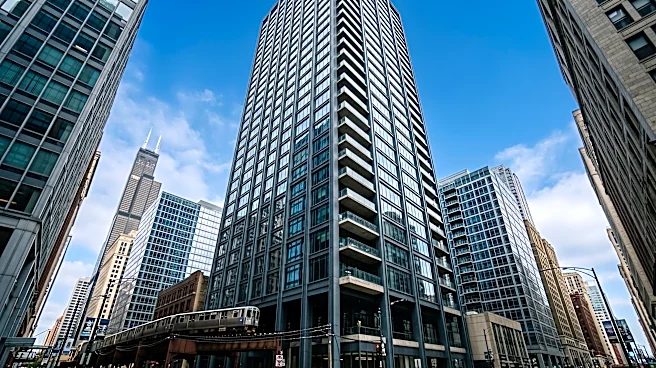
A downtown Chicago apartment building, located at 330 S. Wells St., has been sold in a sheriff's sale, marking the latest development in a prolonged financial struggle for one of the Loop's early office-to-residential conversions. The property, originally
an office tower, was converted into 132 apartments, but accumulated debt led to its foreclosure. LG Group and Marc Realty initiated the conversion of the 137,000-square-foot building in 2018, completing it in 2019. The finished structure includes 132 apartments, 24,000 square feet of office space, and 5,200 square feet of ground-floor retail. The financial difficulties stem from a $28.2 million refinancing loan in 2021. By the end of 2023, the building's debt service of $2.4 million exceeded its net operating income of nearly $1.9 million, despite a 97% occupancy rate. Occupancy later dropped to 88%. The mortgage defaulted in February 2025 after borrowers failed to repay it, leading to the sheriff's sale.
Why It's Important?
This sheriff's sale highlights the financial challenges and risks associated with office-to-residential conversions, even in a market like Chicago that is actively pursuing such projects. While the city has plans for at least 11 office-to-residential conversions, with an estimated 3,600 new apartments in the pipeline, the case of 330 S. Wells demonstrates that high interest rates, financing difficulties, and operational costs can undermine these initiatives. The struggle of this property, despite high occupancy rates, suggests that the economic viability of such conversions is not guaranteed and can be impacted by broader market conditions. This situation could influence future investment decisions and lending practices for similar projects, potentially making it harder for developers to secure financing without robust financial planning and risk mitigation strategies. It also underscores the importance of city-backed programs, like the La Salle Street Corridor Revitalization program, which offer financial assistance to ensure the success of these conversions and the creation of affordable housing.
What's Next?
The immediate next step involves the new investor taking over the property at 330 S. Wells St. The specific terms of the sheriff's sale and the identity of the purchaser remain unclear. This event may prompt a reevaluation of the financial models and risk assessments for ongoing and planned office-to-residential conversions in Chicago. Developers and city planners might need to consider more robust financial safeguards or additional public-private partnerships to mitigate the risks associated with these large-scale projects. The city's existing programs, which provide tax increment financing (TIF) funds for conversions, may become even more critical in attracting and supporting developers. The outcome of this particular conversion could serve as a cautionary tale or a learning experience for future projects, potentially leading to adjustments in policy or investment strategies to ensure the long-term success and stability of converted properties.
Beyond the Headlines
The financial distress of 330 S. Wells St. points to a broader challenge in urban development: the adaptive reuse of commercial spaces in a changing economic landscape. The push for office-to-residential conversions is a response to both a surplus of vacant office space and a shortage of housing, particularly affordable units. However, the complexities of these conversions, including the significant capital investment, regulatory hurdles, and the fluctuating real estate market, can lead to unforeseen financial difficulties. This case also raises questions about the long-term sustainability of such projects without adequate financial backing and supportive policies. The differing estimates of conversion potential and housing output from various reports suggest a lack of unified data or a dynamic market that makes accurate forecasting difficult. The ethical implications of foreclosures on properties intended to address housing shortages, even if privately financed, could also become a point of public discussion, especially if it impacts the availability of affordable housing units.