






What's Happening?
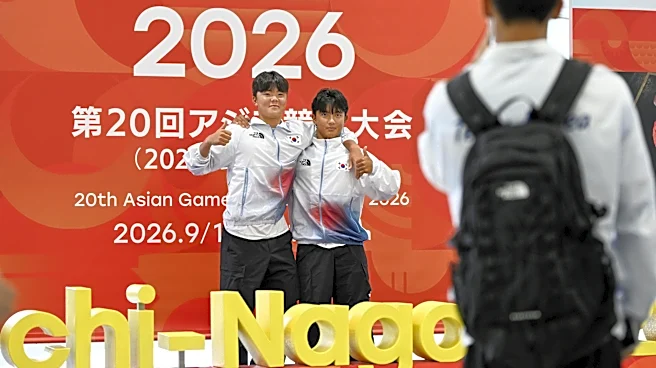
During the Asian Games, the South Korean men’s field hockey team encountered an unexpected incident when the North Korean national anthem was mistakenly played before their match against Bangladesh. The players, preparing for their game, reacted with
bewilderment, with some standing at attention, others running hands through their hair, and some holding hands over their hearts. Event organizers quickly rectified the error, playing the correct anthem. However, due to time constraints, the referee instructed players to exchange greetings while the South Korean anthem was still playing, preventing the athletes from singing along. South Korea ultimately won the match 5-0. This 'awkward mishap,' as described by South Korea's Yonhap news agency, occurred ahead of the official opening of the Asian Games.
Why It's Important?
While seemingly a minor logistical error, the playing of the North Korean anthem for the South Korean team carries significant diplomatic and symbolic weight, especially given the complex and often tense relationship between the two Koreas. Such incidents can inadvertently highlight the political sensitivities that permeate international sporting events. For the athletes, it created an uncomfortable and confusing moment, potentially disrupting their pre-game focus and national pride. The quick correction by organizers was crucial in mitigating further diplomatic fallout, but the event serves as a reminder of the meticulous attention to detail required in international events to avoid unintended political statements or perceived slights. It underscores how even small errors can resonate with broader geopolitical implications, particularly in a region with a history of division and conflict.
What's Next?
Following the incident, event organizers will likely review their protocols for pre-game ceremonies to prevent similar errors in the future. While the immediate issue was resolved, the incident may prompt discussions within the organizing committee regarding the verification processes for national symbols, especially when dealing with politically sensitive nations. There might be internal investigations or enhanced training for staff responsible for managing such critical elements of international competitions. For the South Korean team, the focus will shift back to their performance in the Asian Games, with this incident likely becoming a memorable, albeit awkward, anecdote from their participation. The broader implications for diplomatic relations between North and South Korea are unlikely to be significant from this isolated event, but it serves as a cautionary tale for future international gatherings.
Beyond the Headlines
This incident, though quickly resolved, touches upon the deeper cultural and political sensitivities embedded within international sports. National anthems and flags are powerful symbols of identity and sovereignty, and any misrepresentation can be perceived as disrespectful or even provocative. In the context of the Korean Peninsula, where historical divisions run deep, such errors can inadvertently stir nationalistic sentiments or highlight unresolved political tensions. The players' varied reactions—from standing at attention to showing bewilderment—underscore the personal impact of such a public gaffe on individuals representing their nation. It also subtly reveals the constant undercurrent of political awareness that athletes from certain regions must navigate, even in a supposedly apolitical arena like sports. The event serves as a micro-example of how global events, even those intended for unity, can inadvertently expose geopolitical fault lines.